There is a Setswana proverb that has echoed through generations: Le ojwa le sale metsi.
Translated, it means clay is moulded while it is wet. Once it has hardened, reshaping it becomes difficult.
Our elders understood something that modern leadership theory is only now beginning to
rediscover: character, confidence, curiosity and courage are best cultivated early. We do not wait until adulthood to produce leaders. We nurture them while they are impressionable, while their imagination is unrestricted and while they believe that impossible things might simply require someone brave enough to try.
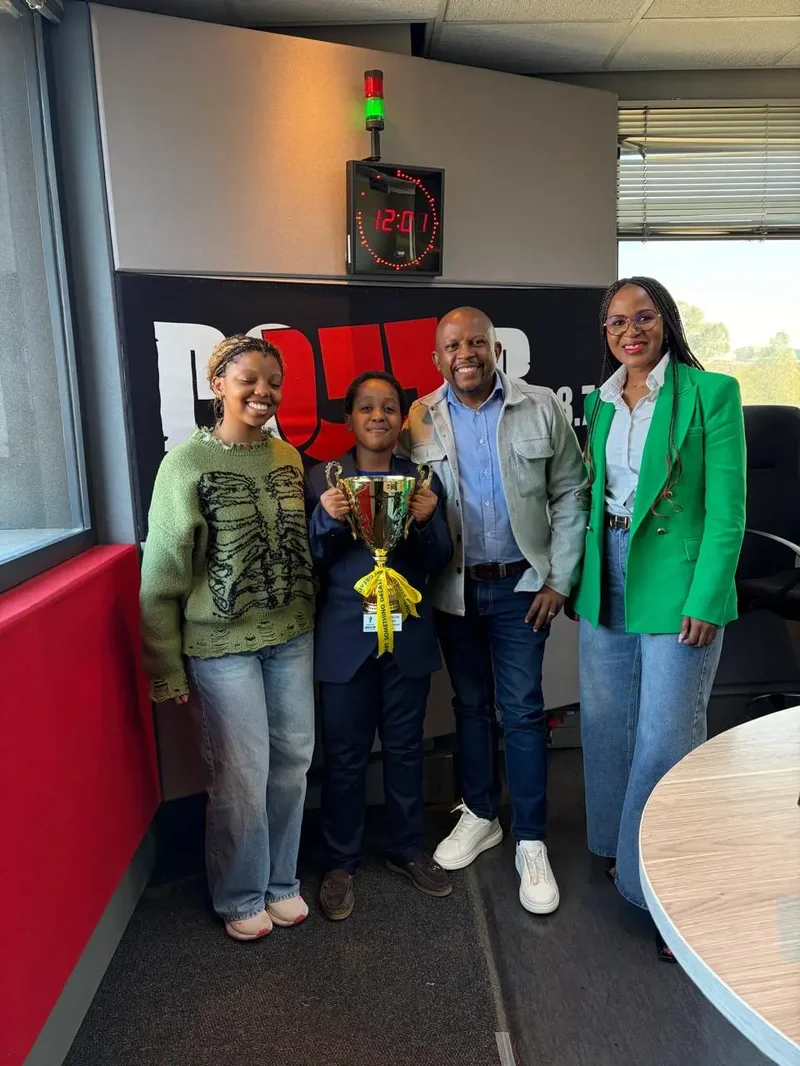
This truth came alive for me during a recent edition of Power Week’s Leadership Spotlight, where I hosted entrepreneur and innovation champion Wendy Silinyana alongside an extraordinary 11-year-old entrepreneur, Asher Hlathwayo.
I expected to interview an accomplished leader. What I did not expect was to leave the studio convinced that South Africa has underestimated the potential in its own children. The interview was not really about Silinyana. It became something much bigger. It became a conversation about what becomes possible when adults choose to invest in children before the world teaches them to doubt themselves.
I have interviewed presidents, captains of industry, Nobel laureates, global activists and
celebrated leaders. Yet there was something deeply moving about watching an 11-year-old confidently explain a business he had created to help keep children safe.
Asher was not reciting lines prepared by adults. He was thinking. He was reasoning. He was solving problems. He spoke with the confidence of someone who had been given permission to believe that his ideas mattered.
As he spoke about Danger Escape, the educational board game he co-created to teach children about personal safety, I found myself wondering how many brilliant ideas never leave the minds of young people simply because no one creates the environment for them to flourish. That is the tragedy we rarely discuss.
South Africa often asks how we will solve unemployment, inequality and poverty. We debate economic growth, investment and industrial policy. The conversations are necessary. Perhaps we ask too few questions about the age at which we begin preparing children to become creators rather than consumers of opportunity. Too often we educate children to memorise answers instead of asking better questions.
Yet every major breakthrough in history began with someone refusing to accept that things had to remain as they were. Innovation is simply curiosity with courage. It is seeing a problem that everyone else has accepted and asking: What if there is another way?
That spirit cannot suddenly appear when someone graduates from university. It must be nurtured over years. It must be encouraged in classrooms, around dinner tables, in libraries and in communities where children are reminded that their imagination is not a distraction but an asset.
This is why initiatives like those championed by Silinyana deserve far greater national
support. Through MiniBoss and BigBoss Business School, young people are not merely taught entrepreneurship as another school subject. They are trusted to build real businesses, solve real problems, pitch real ideas and engage with real markets. The distinction matters.
Confidence cannot be taught through theory alone. It is developed through experience.
Leadership cannot simply be explained. It must be practised. Innovation is not inherited. It is cultivated. The young entrepreneurs emerging from the programmes are evidence of what happens when children are trusted with responsibility instead of being protected from it.
Whether it is developing footwear solutions for people living with mobility challenges, creating games that teach children about safety or building fashion brands that confront bullying and restore confidence, the young innovators are improving the lives of others.
That is leadership. Leadership is not measured by age. It is measured by the willingness to solve problems beyond yourself.
Listening to Asher, I was reminded that our children are often capable of far more than we allow them to demonstrate. Adults sometimes underestimate children because we mistake youth for incapacity. Yet history tells a different story. Young people have challenged injustice, advanced science, transformed technology, started global companies and reshaped societies. Their greatest limitation has seldom been ability. It has often been an opportunity.
As a country, we need to ask ourselves difficult questions:
- What if every school exposed learners to entrepreneurship alongside maths and science?
- What if every community identified and nurtured young innovators before they reached high school?
- What if business leaders adopted schools not simply to donate resources but to mentor future entrepreneurs?
- What if the government viewed entrepreneurship education as essential infrastructure rather than an optional enrichment activity?
- What if we intentionally built ecosystems where ideas could travel from classrooms to boardrooms?
Imagine the South Africa that could emerge. The kind of country Silinyana is trying to build.
We often speak about preparing children for jobs that may no longer exist. Perhaps we should spend equal energy preparing them to create jobs that do not yet exist. The future belongs to those who can think differently. Artificial intelligence will replace certain tasks. Automation will transform industries. Entire professions will evolve.
However, creativity, ethical leadership, empathy, imagination and problem-solving will become even more valuable. These are precisely the capabilities we should be nurturing while the clay is wet. That is the wisdom behind Le ojwa le sale metsi. It reminds us that waiting is expensive. Every year we delay investing in children’s leadership, innovation and confidence is another year of potential quietly slipping away.
The responsibility does not belong to schools alone. Parents have a role. Businesses have a role. The government has a role. Faith communities have a role. Civil society has a role. Every adult who chooses to encourage a child’s curiosity rather than dismiss it becomes part of building the country we all long for.
As I left the studio after that conversation, I found myself feeling unusually hopeful. Hope, after all, is not built only through speeches or policies. Sometimes hope arrives in the voice of a confident child explaining how he intends to make the world safer. Sometimes hope looks like an educator who refuses to wait for permission before preparing children to lead.
Sometimes hope sounds remarkably like an old Setswana proverb that has quietly survived the centuries, reminding us that the future is shaped long before it arrives.
If we want a South Africa filled with innovators, ethical leaders and courageous
entrepreneurs, then we must begin where every generation before us understood we should. We must mould the clay while it is wet.
Sello Hatang is executive director of Re Hata Mmoho