McLaren Minerals has kept the heavy mineral (HM) hits rolling at its namesake titanium project in Western Australia’s Eucla Basin, with a fresh 68-hole assay batch confirming broad and consistent mineralisation from surface across its growing titanium play.
The latest results cover 1432 metres of sampled intervals from the 2026 drilling campaign and returned a length-weighted average of 3.76 per cent HM across an average 21m thickness. Importantly, the company says no heavy mineral cut-off was applied, meaning the numbers reflect the complete sampled intervals rather than cherry-picked higher-grade zones.
All 68 holes averaged at least 2 per cent HM, while 59 holes, or 87 per cent of the batch, averaged at least 3 per cent. A further 24 holes, or 35 per cent, ran at 4 per cent HM or better, giving McLaren another solid slab of data to feed into its updated geological model, mineral resource estimate and bankable feasibility study work.
Additionally, 58 drill holes, or 85 per cent of the batch, delivered sampled intervals of at least 18m, including 48 holes, or 71 per cent, with intervals of 21m or more.
‘The focus of this program has always been on increasing confidence in the Resource and continuity of mineralisation.’McLaren Minerals managing director Simon Finnis
Standout intercepts – notably all from surface - include 24m at 5.44 per cent HM with a maximum grade of 10 per cent HM from 8m to 9m; 24m at 5.08 per cent; 22m at 5.16 per cent; and 12m at 5.95 per cent, the highest average grade encountered in the results.
Thicker runs included 29m at 4.07 per cent HM in one hole, almost mirrored by another hole returning 27m at 4.17 per cent HM.
McLaren says the repeatability of both grade and thickness across successive drill traverses is the real prize. Also, the consistent occurrence of grade from surface is another key merit in the dataset. Both characteristics are valuable development attributes, smoothing out geological modelling and potentially providing a more uniform basis for mine design, production scheduling and process-feed planning.
McLaren Minerals managing director Simon Finnis said: “I’m going to sound repetitive, but that’s because these results continue to tell the same story. We’re consistently intersecting broad mineralised intervals from surface with repeatable grades and thicknesses across the deposit. That’s exactly what we wanted this drilling program to demonstrate.”
The latest assays build on a busy few weeks for McLaren. In June, the company reported bonanza grades of up to 34.6 per cent HM from its resource upgrade and expansion drilling, including encouraging early results from a southeastern extension area outside the present indicated resource footprint.
Earlier this month, the company confirmed it had completed its 2026 drilling program, with all of its planned 663 holes drilled for 11,568m, just 86 per cent of its planned drilling metreage.
That campaign was the first major stage of McLaren’s bankable feasibility study work and is expected to support a resource upgrade, follow-on mine reserves estimation and the broader development studies now gathering pace.
McLaren’s project sits in the western Eucla Basin and already hosts a 529-million-tonne JORC-compliant resource grading 4.5 per cent HM for an estimated 23.7Mt of contained HM.
The company has its eye principally on the titanium mineralisation, with titanium recognised globally as a critical mineral. Demand for the metal continues to rise, driven by its importance in aerospace, defence, medical and energy technologies.
Titanium possesses the highest strength-to-weight ratio of any metallic element, closely matching the strength of low-grade steels. It is also resistant to corrosion forming a tight, self-healing oxide film on its surface when exposed to air and moisture, making it highly resistant to seawater and chlorine.
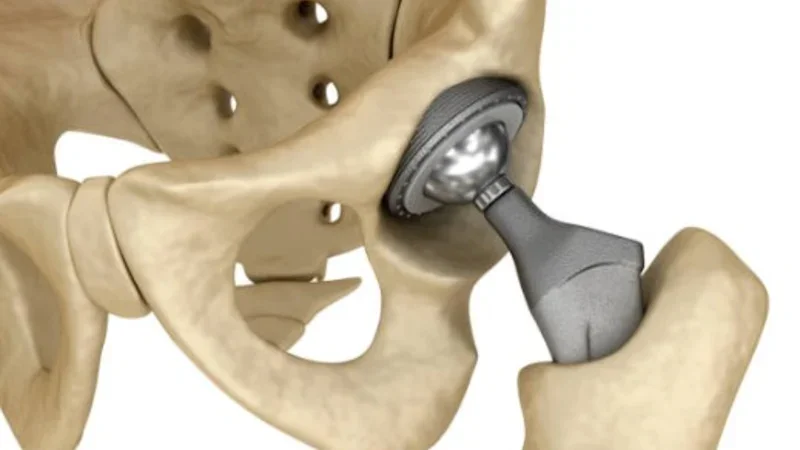
Titanium is also biocompatible, being non-toxic and completely non-reactive to human body tissues and bone, making it safe for use in medical applications such as strong, light, weight-bearing replacement implants in skeletal joints.
With final assays still to be validated and folded into the model, metallurgical test work moving ahead and the feasibility study pathway well under way, McLaren appears to have achieved what every aspiring developer desires; transforming a drilling program into a bigger, tidier and more bankable-looking dataset.
Is your ASX-listed company doing something interesting? Contact: mattbirney@bullsnbears.com.au