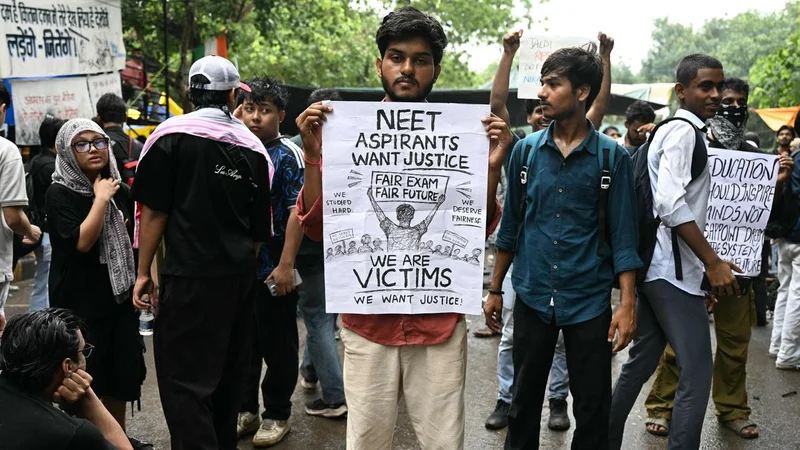
With the successful demonstration by the Cockroach Janta Party, a point has been made. A light has been shown in our national darkness. We can use that light, or we can continue to curse the darkness. The choice is always there. Gen Z has pronounced a fiat. It will be wise on our part to take heed. The education system needs not just an overhaul but also a complete change. A change in policy itself. We must now sit down and work out a system in which examinations are seen as fair, conducted professionally, and taken happily and voluntarily. Competitive examinations should no longer be associated with student suicides.
India’s education system has produced extraordinary professional talent, yet its admission culture has also created a dangerous emotional environment in which marks, ranks, and single-shot competitive examinations are often treated as the sole measures of intelligence, worth, and future possibility. This must change.
Examinations need to become more inclusive, projecting students’ worth and abilities even as they assess a candidate’s competence for the chosen field of higher education. Gen Z is very aware of the competitive world it has inherited and is quite capable of making prudent choices for its future. It is up to us — parents, teachers, and policymakers — to consult with them and evolve a system that is fair, robust, and respected.
Assessing competence
A fair system of admission must adopt a multi-dimensional assessment of competence. Admissions should combine moderated school performance, discipline-specific aptitude, analytical writing, structured interviews where appropriate, practical or scenario-based tasks, and verifiable portfolios, projects, internships, community work and co-curricular achievement.
Such an approach would test not only memory and speed but also reasoning, persistence, communication, judgment, ethical orientation and suitability for a chosen field. Entry-level institutions themselves, with the involvement of competent schoolteachers, should design and administer these assessments with transparent criteria and proper safeguards. Examinations should be redesigned to assess application, interpretation and higher-order thinking rather than predictable patterns that feed the coaching industry. This would preserve standards while aligning admissions more closely with real ability, educational purpose and student potential.
**
Editorial | Unaddressed challenges: On India’s crisis in education**
Industry, parents, and students must together broaden the meaning of educational success beyond a few high-pressure professional courses. Regular industry interaction through career fairs, internships, mentorship programmes, workplace visits, and alumni engagement can make students aware, even at the school level, of emerging opportunities in newer sectors and reduce blind dependence on competitive examinations for traditional career paths. Parents, especially those with limited access to reliable information and who often resort to unaffordable loans, need structured counselling in local languages on courses, careers, costs, scholarships, aptitude, mental-health risks, and the difference between a child’s interests and parental ambitions. Students must be helped to assess their abilities, dispositions, and aspirations realistically through guidance and aptitude-based conversations rather than prestige-driven choices. When informed industry exposure, responsible parental support, and self-aware student decision-making come together, educational choices become more rational, humane, and less fear-driven. This is the groundwork on which a fair and effective entry-level assessment system can be built.
Role of elected representatives
The Constitution treats education as a public good, not a commercial race, and places a clear duty on the state to protect equality, dignity, and the right to education, especially for children and weaker sections. When the coaching ecosystem becomes exploitative — creating inequality, displacing formal schooling, and harming student well-being — Parliament and State legislatures must respond through law, regulation, and oversight. Members of Parliament and Members of the Legislative Assemblies may not be individually liable for a persistent social problem, but they remain institutionally responsible for creating and enforcing safeguards on fees, advertising, mental-health support, hostel standards, and fraudulent practices. In the face of evidence of student suicides and commercialisation, persistent inaction invites democratic and legal scrutiny, making urgent action a constitutional responsibility.
Does one size fit all? No. A centralised agency such as the National Testing Agency rests on the assumption that one examination model can fairly judge all students across disciplines, regions and social contexts; this assumption is flawed — especially in a country such as India, which is varied in every possible way. Institutions and professional bodies are better placed to define what they seek in candidates because they understand the intellectual and academic demands, skills, aptitude and ethical orientation required for specific courses leading to careers. A single national test also creates logistical overload and demographic unfairness: language, geography, school background, digital access, and local educational disadvantages all affect performance, making a “one-test-fits-all” model neither educationally sound nor socially just.
A decentralised system, with universities or clusters of institutions designing and conducting their own assessments within broad University Grant Commission norms, would allow for more relevant and balanced evaluation. Students, too, may be consulted through structured representation in identifying appropriate modes of assessment, though access to live question papers or confidential content should be strictly avoided. To preserve sanctity and prevent paper leaks, these safeguards are essential: encrypted digital paper transmission; multi-layered question banks with algorithmic randomisation; strict vetting and rotation of paper setters; secure printing and sealed distribution protocols; independent audit and surveillance of examination centres. And severe penal consequences for any breach. Additional safeguards may include biometric candidate verification, time-staggered papers, and post-examination forensic review of anomalies.
Properly scheduled, decentralised examinations spread across the academic calendar would reduce stress, avoid nationwide disruption from a single failure, and permit institutions to test genuine competence and readiness rather than coaching-driven examination technique alone.
Entrance exams should help our students assess themselves for their abilities and competency in a chosen field. Students should undertake the exams willingly, with the clear understanding that it is indeed a competitive world, and that they have a self-worth even beyond the particular exam that they are sitting for. When alternate career choices are there, the pressure on the students is much less; and if they are passionate about a profession, then they will learn to work hard for it.
A humane direction for reform
India requires a shift from rank-based filtration to capacity-based recognition. A just admissions system should ask not only who scored highest under exam pressure, but who has the aptitude, motivation, ethical seriousness, resilience, and capacity to grow in a chosen field. Such a system would still value excellence, but it would define excellence more intelligently and more humanely. Over the past few days, Gen Z has brought us face-to-face with a dark secret we have long lived with: the overemphasis on certain professions. This generation has choices, and we must allow them to choose responsibly while understanding the consequences.
The constitutional promise of education cannot be fulfilled by a structure that rewards fear, debt, and psychological distress while calling the result merit. The alternative lies in holistic assessment, regulation of coaching commercialisation, institutionalised mental-health support, industry involvement, and sustained counselling for parents and students, keeping interests, abilities, and dignity at the centre of educational choices. This will help create happier and more confident young people who choose careers deliberately, not out of compulsion, paving the way for a better India and a better world. If these changes begin now, the suicides caused by entrance examination stress can come to an end.
John Varghese is the former Principal of St. Stephen’s College
Published - August 01, 2026 12:16 am IST