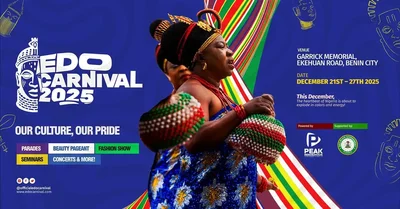
Weeks after controversy trailed the delayed disbursement of prizes, organisers of the Edo Carnival have paid winners of the maiden band competition.
This was made known in a statement by the organisers of the Edo Carnival, made available to PREMIUM TIMES on Monday.
According to the Organisers, an event was held on 18 April in Benin City, during which beneficiaries received their prizes amid palpable relief, bringing closure to a dispute that had dominated social media conversations and raised questions about the credibility of the festival and its backers.
The Edo Carnival, which debuted earlier this year, had drawn widespread attention for its colourful parades, elaborate costumes and energetic street performances, features reminiscent of established festivals such as the Calabar Carnival and Brazil’s Rio Carnival.
Fallout
However, its early success was soon overshadowed by complaints from participants who accused organisers of failing to fulfil financial commitments promptly.
Those concerns, amplified online, triggered public criticism and, in some quarters, misplaced accusations directed at the Edo State Government.
Speaking at the prize presentation, co-convener Daniel Eromosele moved to dispel what he described as “misleading narratives” about the event’s structure. He clarified that the Edo State Government was not the organiser of the carnival but a supporting partner, alongside private sponsors and other stakeholders.
“It is important to correct the impression that the government organised the carnival and failed to pay participants. That is not the case,” he said, urging the public to exercise caution and responsibility in disseminating information.
Mr Eromosele added that while financial incentives remain a key aspect of participation, the broader objective of the carnival is to showcase Edo’s rich cultural heritage, foster unity and create opportunities within the state’s growing creative economy. Cultural festivals, he noted, have increasingly become economic drivers in Nigeria, attracting tourism, stimulating local businesses and providing platforms for young creatives.
Resilience
He also commended the planning committee, sponsors and participants for delivering what he described as a successful maiden edition, highlighting the organisers’ resilience in navigating logistical and financial challenges often associated with first-time large-scale events.
For many of the winners, the ceremony represented more than the settlement of outstanding payments. It was, they said, a validation of their artistry and commitment to preserving Edo’s cultural identity through music, dance and performance.
Organisers used the occasion to signal a forward-looking agenda, announcing plans for a more structured and expansive 2026 edition, with improved coordination, clearer funding frameworks and broader participation.
The prompt resolution of the payment dispute, they argued, marks a turning point for the festival, helping to rebuild trust among stakeholders and reposition the Edo Carnival as a potential fixture on Nigeria’s cultural calendar.