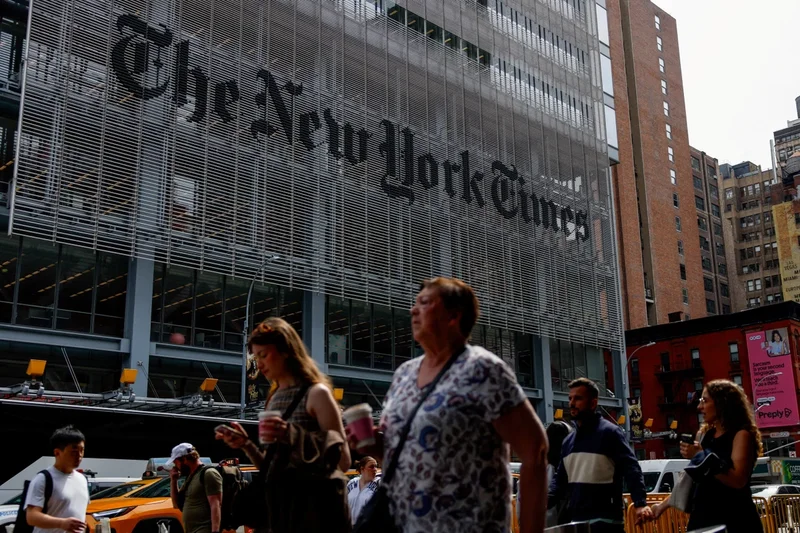
The Justice Department has subpoenaed records from a New York Times freelance journalist as part of a probe into the sourcing of a 2025 story on a botched U.S. military operation in North Korea, the newspaper said Saturday.
Freelance journalist Matthew Cole received a subpoena in February from Virginia prosecutors, who are demanding access to over two years of his professional notes and his testimony, according to reports.
While Reuters could not immediately independently verify the information, a spokesperson for The Times confirmed that Cole is disclosing the subpoena.
“We support Matthew Cole’s decision to make public a subpoena that the government has attempted to keep secret," New York Times spokesperson Charlie Stadtlander said in an emailed statement.
The story co-written by Cole detailed how Navy SEALs in early 2019 killed several unarmed North Koreans during a mission to plant a listening device near the country's coast, citing two dozen unnamed sources.
"It is part of the government’s escalating attacks on journalists, which should concern all Americans. … The demand that he disclose his sources is another brazen and illegal attack from the administration designed to deny the public information of vital importance,” Stadtlander said.
The U.S. Justice Department did not immediately respond to a request for comment.
The newspaper is paying for Cole's legal representation, the article said. His attorney, David A. O'Neil, did not immediately respond to a request for comment.
Last week, the U.S. government withdrew subpoenas compelling three New York Times reporters to testify about their sources, following sharp criticism from a federal judge regarding its "sloppy legal work."
The subpoenas, issued in connection with articles concerning President Donald Trump’s Qatari-gifted Air Force One jet, were retracted in U.S. District Court.
Judge Arun Subramanian presided over a contentious hearing, visibly irritated by government attorneys.
"Subpoenas are the last step, not the first step, but the last step," the judge declared, referencing rules designed to safeguard First Amendment rights. He accused the government of turning the law and regulations "on its head."
Subramanian underscored that, given the protections afforded to journalists, the government was obligated to exhaust all other avenues for information before issuing subpoenas.
He reiterated, "Subpoenas are not the first thing you do; they are the last thing you do," during a proceeding where his questioning of government lawyers became increasingly heated regarding their investigative steps.