TEHRAN - Ayatollah Seyyed Ali Khamenei, the late Leader of the Islamic Revolution, was laid to rest in the holy shrine of Imam Reza in the city of Mashhad on July 9, four months after he was assassinated in a U.S.-Israeli strike on his residence. The attack also claimed the lives of several of his family members, including his 18-month-old granddaughter.
The long-awaited funeral concluded in Mashhad after several days of processions in Tehran, Najaf, Karbala, and Qom, drawing tens of millions of participants—an estimated 43 million people. Before the Leader’s body began its journey across these five cities, representatives from dozens of countries paid their respects during a ceremony in Tehran.
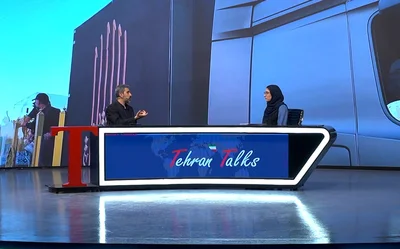
To unpack the domestic and geopolitical significance of these events, we sat down with political analyst Ehsan Salehi. During the interview, Salehi examines the deeper currents beneath the public grief and explores what this historic moment means for the future of Iran and the region.
Below is the full text of the interview, edited for clarity and conciseness:
The funeral processions of the martyred Leader were highly extraordinary from a demographic perspective, and one could even call them unprecedented in contemporary history. What do you consider to be the roots and reasons for this?
This war has seen many ups and downs. The phase we just passed through last week—the farewell and funeral of your martyred Leader—was, as you correctly noted, an unprecedented event. We have rarely seen anything like it, either in Iran or anywhere else, and this phenomenon needs to be discussed.
Two points come to mind regarding the massive crowds that attended this funeral and the immense gratitude the people showed for the Leader of the Revolution. First, this war, which began on its very first day with the martyrdom of the Leader, had various underlying contexts. Perhaps one of the most important was the events of last January. Those incidents were somewhat predictable; after the 12-day war, many believed that because the enemy's invading air force failed to achieve any results on the ground, they needed a new strategy. If you look at Netanyahu’s interview on the first day of the 12-day war, he spent almost half of it inviting the Iranian people to join them, trying to incite unrest.
When that didn't happen during the war, everyone guessed that any new war would require a social pretext. The enemy sought to intervene in Iranian society, hoping to spark riots and chaos that would both legitimize a military invasion and serve as a distraction for a ground offensive. The recent unrest gave the enemy false hope that there would be infantry on the ground ready to join them. Furthermore, the enemy continuously tried to legitimize their military intervention under the guise of "humanitarian intervention," claiming the Iranian people needed to be saved.
However, when Iranian society suddenly found itself in a war where its Leader was martyred on the very first day—and despite Trump and Netanyahu once again inciting the public to join them and "take matters into their own hands"—the Iranian society did the exact opposite. They displayed an extraordinary reaction that we didn't even see during the 12-day war. To use a term from the martyred Leader of the Revolution, we witnessed an "awakening" and massive self-awareness. The people felt a historic duty to stand alongside the armed forces, safeguarding the social and soft-war fronts while the military handled the hard war.
The public understood that they had to stand firm to protect the country. They viewed the funeral as a continuation of that very war—a vital link in generating power for the nation. It was a battlefield where their presence generated national strength. Alongside this, there was the intense emotion and grief of losing the Leader, which only intensified over the past four months. This grief evolved into a sense of victory because the enemy failed to achieve its goals. Why did the enemy fail? Largely because the Leader, who is no longer with us, had spent years building institutions, systems, and a society prepared for such a day. This power stood up against two nuclear superpowers and created a historical marvel. Unlike the past 200 years of pre-revolution history, where Iran always lost something in wars, this time we pushed the aggressors back. The combination of self-awareness, the ongoing sense of duty to project national strength, and deep, intensifying emotional devotion resulted in this massive turnout.
For years, Iran's enemies have made various claims about the Iranian people's relationship and feelings toward Ayatollah Khamenei. What is your perspective on these claims in relation to the martyred Leader's funeral?
According to reports from American media itself, the current ruling body in the White House is intellectually and strategically short-sighted. Over the past 47 years of enmity toward Iran, various U.S. administrations have shared a common goal: overthrowing the Islamic Republic and installing a puppet regime, or at least containing it. They have utilized strategies ranging from supporting the opposition to economic sanctions and Trump's "maximum pressure" campaign.
However, a major reason for their recent failures, particularly during the 12-day war and this recent conflict, is that the current U.S. administration and key apparatuses like the Pentagon and intelligence agencies lack the caliber of their predecessors. Reports from early in Trump's administration noted that his team was mostly composed of "yes-men" who would merely verify and rubber-stamp his ideas rather than critically evaluating them.
This led to disastrously flawed calculations. We saw four-star generals purged from the Pentagon because their strategic foresight clashed with the administration, alongside the dismissal of thousands of experts to "shrink the government." Furthermore, non-governmental channels connected to the administration, such as the FDD or Jewish think tanks like JINSA—which essentially act as the Israeli regime's lobbyists in Washington—gained massive influence. Their agenda was to push the U.S. toward maximum hostility and aggressive actions against Iran.
This combination of a gutted, inexperienced decision-making body and the amplified influence of Israeli-aligned pressure groups led the U.S. to drastically misjudge the internal situation in Iran. They wrongly believed Iran was weak, on the verge of collapse, and would not retaliate in places like the Strait of Hormuz.
One of the descriptions the current Leader used in his message following the funeral was that it was "enemy-shattering." Does this description reflect reality?
Yes, as I mentioned, this funeral was not separate from the war itself. Just as the war had various stages, this funeral was a massive display of the Islamic Republic's soft power and ideological strength against an enemy with whom our business is not yet finished. This massive turnout undeniably altered their calculations regarding the Iranian people. It deeply upset and frustrated them, and we certainly welcome their despair. It was truly an "enemy-shattering" event.
In the funeral and the Leader's message, the theme of revenge was highly prominent. What is your analysis of this?
The primary message of the ceremony was power, but the message of blood vengeance and revenge was central. For our people, seeking revenge has deep religious and even mythological roots. In our ancient literature, like the Shahnameh, the story of Siavash's unjust killing and the subsequent quest for vengeance by Rostam and Kay Khosrow is a pivotal chapter. Religiously and historically, the uprising of Ashura and the vengeance for the blood of Imam Hussein (pbuh) is a living concept; Shia Muslims are still awaiting the reappearance of Imam Mahdi (pbuh) to take revenge for his ancestors.
However, this is not merely an emotional issue meant to satisfy the public's heart; it is a critical matter of politics and power deterrence. Over a year ago, Dennis Ross wrote an article discussing the U.S. decision to assassinate General Soleimani. He noted that some in the U.S. government warned it could trigger a Third World War, while others argued it would be cost-free. Ultimately, Trump faced no heavy strategic cost for it.
The point is, if we do not deliver a response at the highest level, there is no reason for the enemy not to repeat such actions. While we delivered significant responses in this war—the historic closure of the Strait of Hormuz, missile strikes on U.S. bases, which were all massive displays of hard power—the reaction to the assassination of a country's highest official must be proportional. Crossing this unprecedented red line—something even warring nations in the World Wars avoided—cannot be met with tolerance. There must be a dedicated, focused unit within our military and security apparatus solely tasked with designing and executing a proportional, symmetrical response. If this does not happen, the damages will be irreparable.
The funeral of the Leader and his martyred family in Iraq was also magnificent and created epic scenes. How should we analyze the expressions of emotion from such a massive crowd of Iraqi people?
The scenes in Iraq were brilliant, some even surpassing what we saw in Iran. I was blessed to be there. In Najaf, the ceremony started at 5:30 AM and lasted until 1:30 PM. The vehicle carrying the bodies then moved toward Karbala. The official plan was for the procession in Karbala to take three or four hours. Instead, massive crowds accompanied the vehicle on foot for miles. The sheer density of the crowd meant that the bodies, expected at 4:00 PM, did not arrive at the holy shrine until 2:30 AM.
If someone had told us 40 years ago—when we were at war with Saddam's regime—that the Leader of the Islamic Republic would be mourned with such breathtaking passion in Iraq, no one would have believed it. Where do these emotions come from? It stems from Iraq's experience of brotherhood with the Islamic Republic. They remember Iran's help in fighting ISIS under the command of the beloved martyr Qasem Soleimani, guided by the Leader's wisdom. Furthermore, after the U.S. invasion of Iraq, the American plan was to use it as a stepping stone to invade Iran. Thanks to the martyred Leader's strategic brilliance, not only was Iran protected, but Iraq became a quagmire for the Americans, ultimately bringing friends of the Islamic Republic to power there. The Iraqi people deeply appreciate this history, alongside their profound religious reverence for Ayatollah Khamenei as a grand religious authority.
Aside from Iraq, we saw a significant number of guests from various countries attend the ceremonies, and spontaneous gatherings were held globally. What does this indicate?
It shows profound global bonds. If it had been possible to take the holy bodies to countries like Pakistan, the scenes would have been unimaginable. In the early days of the war, popular outrage in Pakistan over U.S. actions was so intense that crowds attacked the U.S. embassy, resulting in casualties just trying to hold the masses back.
On a diplomatic level, the sheer presence of foreign delegations in Tehran was a de facto condemnation of the United States. This is why the U.S. Secretary of State actively tried to pressure countries not to attend and to keep the ceremony low-profile. By paying respects to a leader unjustly assassinated by the U.S. on the first day of a war, these nations were actively protesting American actions. The high level of the delegations, even from countries hosting U.S. bases, carries a deep message for the Americans and global analysts.
According to reports, the martyred Leader’s burial in the holy shrine of Imam Reza was based on his own will. Why do you think he made such a will and did not want a separate, dedicated mausoleum as the Leader of Iran?
Many in Tehran strongly preferred that the site of his martyrdom be turned into a shrine, which would have become a massive cultural and pilgrimage center for revolutionaries. However, his devotion to Imam Reza (pbuh) was boundless. As someone originally from Mashhad, his spiritual connection to the Imam was profound. If you look at the footage of him performing the dust-clearing ceremonies at the shrine, his spiritual state is deeply enviable. I believe it was his lifelong dream to rest in the embrace of Imam Reza, and he finally achieved that wish.
In your personal view, what were the most prominent personality traits of the martyred Leader?
His character will undoubtedly be discussed far more now that he has passed. Often, the veil of contemporaneity prevents people from fully grasping the magnitude of a figure while they are alive. He was a truly comprehensive personality—a masterful and undisputed jurist, and someone with a breathtaking command of literature, history, the history of colonialism, and global affairs. He led with open eyes, possessing complete historical mastery.
However, if we could ask him today how he would like to be remembered, I believe the trait would be Mujahid (a warrior/striver in the path of God)—the Imam of Jihad. His entire life was defined by struggle. In 1972, he delivered a series of lectures, now published as The Co-fighters of Hussein, where he outlined the duty of an Imam: to protect the Prophet's ideology from distortion, and to manifest that ideology into action by establishing a government. This inherently leads to conflict with tyrants, and he viewed the 250-year history of the Shia Imams as one continuous, unified struggle.
He believed that life rests on two pillars: ideology and Jihad. And Jihad isn't just any good deed; it is specifically the struggle against the enemies of God. His entire intellectual school and practical life were rooted in this. Even his death was an act of Jihad—not a normal passing in a bed, but a martyrdom that itself sparked an awakening and continued the struggle. It was this exact spirit of Jihad that allowed the Islamic Republic to generate the power that leaves the world in awe today. Leaders with such divine courage ignite the dormant potential of their societies.
As a final question, I would appreciate it if you could share a close, personal memory of the martyred Leader.
In 2014, a few friends and I had the privilege of meeting the martyred Leader after the screening of a documentary for which I had done the research. After prayers, he stood and warmly greeted us. When a colleague explained our work to him, his response deeply reflected what I just mentioned about his character. He told us: "Push the work forward firmly, do not stop."
He was the greatest motivator for anything that generated power, self-reliance, and morale for this country. Whether in science, the military, or diplomacy, he was a father figure and a relentless driving force. For instance, if you read the memoirs of the late General Hassan Tehrani Moghaddam, the father of Iran's missile program, you'll see that the Leader was his greatest personal supporter and motivator. The missile power that puts aggressors in their place today is the direct result of his strategic architecture and encouragement. He did the same for the country's scientific renaissance, literature, and economics. Especially over the last seven or eight years during the U.S. maximum pressure campaign, his unwavering focus on domestic production drove the country forward. Everyone who worked in these fields has countless memories of his profound ability to remove obstacles and inspire greatness.