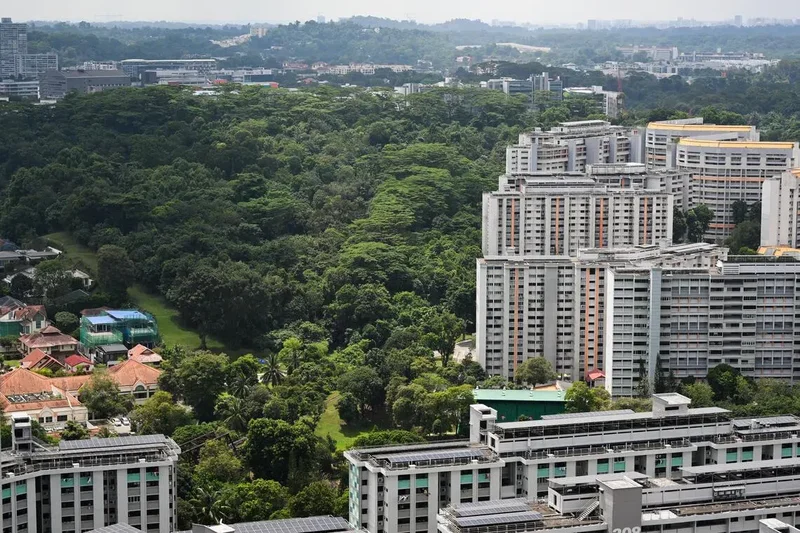
Gillman Barracks, Maju Forest need to be developed to meet housing needs over next decade: Alvin Tan
AI generated
SINGAPORE - Many of the sites suggested as alternatives to Maju Forest and Gillman Barracks for housing are already earmarked for homes, needed for other national purposes or cannot be redeveloped yet, said Minister of State for National Development Alvin Tan.
That is why the areas at Gillman and Sunset Way, near Maju Forest, need to be developed to meet Singapore’s housing needs over the next decade, he told the House on Aug 4.
Nineteen MPs had asked about a range of issues - including balancing of housing needs with environmental preservation, the effectiveness of public feedback and the transparency of the planning process - after the Housing Board released its plans for the areas on July 10.
Singaporeans, especially those living near the areas affected, have raised concerns about the loss of the spaces that they consider key to their neighbourhoods, with some crafting proposals, organising dialogues and petitioning their MPs to raise the issues in Parliament.
Tan reiterated in Parliament that plans for Gillman Barracks and Sunset Way “have not been finalised”.
After the formal four-week public consultation period closes on Aug 6, the Government will conduct further engagements with stakeholders and closely review the study findings and feedback received before finalising development plans, he said.
“This could involve adjustments to the development layout and the amount of greenery and heritage to conserve,” added Tan, who is also Minister of State for Foreign Affairs.
But he made clear that the development of both areas will go ahead, in response to WP Non-Constituency MP Andre Low. “We will proceed, but how we build is important,” Tan said.
Addressing proposals from residents to build on sites that appear vacant or underused instead, Tan said some of these are already intended for housing.
For instance, the former ITE HQ site in Dover will be re-developed for a mix of public and private housing to be launched over the next few years, while the Cross Island Line worksite near Sunset Way at Albert Winsemius Lane will be considered for redevelopment in future after the MRT line is completed.
Meanwhile, Maju Camp is needed for national defence needs and cannot be used for housing at this point, Tan said.
Turning to areas located nearer to Gillman Barracks, Tan said the Depot Lane Industrial estate is part of future housing supply, with ongoing demolition of buildings to prepare the site.
The former Central Manpower Base site is still needed by the Ministry of Defence, while the Pasir Panjang reserve site currently houses the MOE Outdoor Adventure Learning Centre and can only be redeveloped in the longer term, he added.
Growing housing demand
Turning to why housing demand continues to grow despite the falling total fertility rate, Tan said Singaporeans who are buying homes today and in the near future were born decades ago when birth rates were higher.
He cited smaller household sizes as another reason, with many young married couples wanting a home of their own, and preferring to live near their parents.
More singles are also setting up homes of their own, and more seniors are living alone, he said.
“These trends mean we need more homes than we did in the past, as the total number of households has increased.”
He noted that many MPs on both sides of the House have called for wider access to public housing and shorter waiting times for Build-to-Order flats.
“If we want more Singaporeans to qualify for HDB housing, and to get their homes sooner, then we must build more homes and build them faster,” he said.
Outlining how the Government decides where to build, Tan said it begins by looking at vacant land, maximising the uses of existing land as well as building higher and going underground.
He cited the re-development of the former Keppel Golf Course, as part of the upcoming Greater Southern Waterfront. By 2030, the Government will have taken back more than 400ha of golf-course land for re-development, he noted.
Tan said Singapore has about 7,800ha of green spaces, including nature reserves, as well as an additional 1,000ha of green space, even after accounting for planned developments in the latest Master Plan.
When a site is developed depends on national needs, the availability of alternatives and if supporting infrastructure is ready, he said.
“Within this framework, we will always do our best to retain sites with significant greenery and heritage value. But there will be occasions when no other suitable site can meet the same need, in the same area, and within the required timeframe,” Tan added.
Conserving more will mean building fewer homes
He noted that the sites have been earmarked earlier for residential use, with the planning intention for housing in Sunset Way reflected in the Master Plan since 1980 and the intention to study Gillman Barracks for housing announced in 2024.
Under the plans, about two-thirds of the 23ha Maju Forest along Sunset Way are proposed for public housing, with the remaining areas retained as wildlife refuges and ecological corridors.
Gillman Barracks, a former military site with heritage buildings, and part of the forest nearby has been proposed for a mixed-use residential neighbourhood with public and private housing.
Tan said over the years, the ministry had prioritised brownfield redevelopment in Clementi, Bukit Merah and surrounding areas, which included redeveloping the former Keppel Golf Course.
Demand for housing in these estates remains strong, he said, adding that recent BTO launches at Clementi Emerald and Berlayar Rise were each oversubscribed by over four times.
Addressing concerns about urban heat raised by several MPs and residents, Tan said the HDB will study how to design future neighbourhoods to reduce temperatures.
This includes using environmental modelling to improve wind flow, incorporating greenery and orientating residential blocks to minimise direct sun exposure.
Responding to questions on how many homes the sites will yield, Tan said the ministry is unable to give an exact figure because the layout, scale and detailed design have not been finalised.
He noted that the Government has already, in its current plan, reduced the number of homes to retain important green and heritage areas identified through impact assessment studies.
“If we conserve even more, we will build even fewer homes, so we must weigh this trade-off carefully before reaching a final decision.”
Tan, who visited Maju Forest on July 31 with nature enthusiasts, added that he appreciates the time and effort spent in studying reports, attending dialogues and submitting detailed feedback.
“We are studying the environmental and heritage findings, listening to public views, and examining how the proposals can be improved before the detailed plans are finalised,” he said.
“These difficult choices are not unique to Gillman Barracks and Sunset Way. They will continue to confront us as we build homes, strengthen our economy, expand our infrastructure, and realise our vision of a City in Nature.”