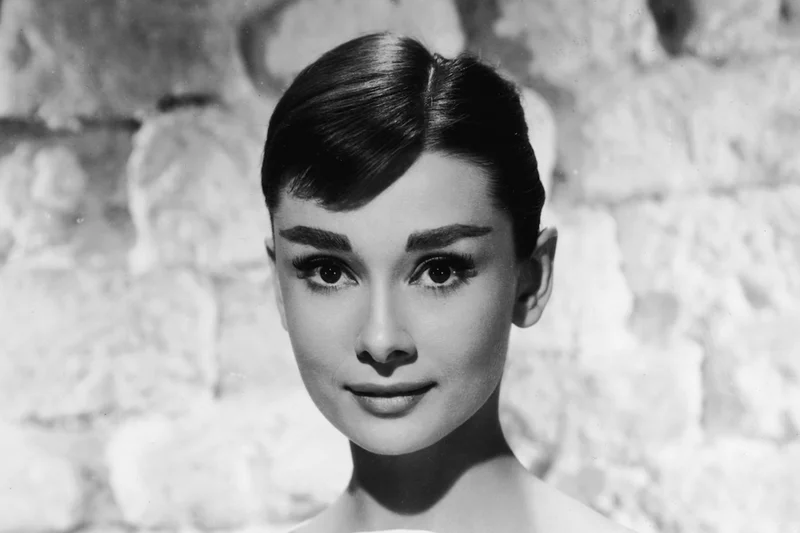
Audrey Hepburn had starring roles in classics Breakfast at Tiffany’s and Roman Holiday – but she turned down a major 1950s role due to personal trauma from the Second World War.
Hepburn was 10 when the war broke out in 1939, and lived in the Netherlands throughout the conflict. In Wendy Holden’s 2026 biography Intimate Audrey, the actor’s son Sean Hepburn-Ferrer claimed that Hepburn almost died of starvation during this time and was left terrified by people suddenly disappearing from her life, including her uncle Otto, who was shot in retaliation for an act of sabotage by the resistance movement.
One year after the war ended in 1945, Hepburn was given the first draft of Anne Frank’s diary by an editor at a publishing house, which was released in the Netherlands in 1947. Hepburn-Ferrer said that his mother told him that Frank “wrote about everything I experienced and felt”.
So when Hepburn was offered a role in the 1959 adaptation The Diary Of Anne Frank, she considered the opportunity carefully. The film was brought to Hepburn by director George Stevens after her Oscar-nominated roles in Roman Holiday (1953) and Sabrina (1954), prompting Hepburn to re-read the book.
According to her son, the actor was left “quite destroyed again” and had recurring nightmares from the trauma she herself had endured.
He claimed that Hepburn said: “War left me with a deep knowledge of human suffering, which I expect many other young people never know about. The things I saw during the occupation made me very realistic about life, and I've been that way ever since.”
The role of Anne Frank eventually went to Millie Perkins. The film was nominated for eight Oscars and won three: Best Supporting Actress for Shelley Winters, Best Cinematography and Best Art Direction.
Meanwhile, Hepburn starred in The Nun's Story (1959) instead, receiving a third Oscar nomination and winning her second Bafta, having won previously for Roman Holiday.
She followed this up with films including Breakfast at Tiffany’s (1961), Charade (1963), My Fair Lady (1964), Two for the Road (1967) and Wait Until Dark (1967). Her final film role was in Steven Spielberg's 1989 film Always.
Towards the end of her career, she switched her focus to humanitarian work and was appointed the Goodwill Ambassador for Unicef. As part of this role, she travelled to Somalia in 1992 – and it was after this trip that she discovered she had a rare form of abdominal cancer.
Hepburn died in January 1993, aged 73.