Hey, how’s it going? I hope you had a lovely weekend. I was off last week, relaxing by the water, trying to finish a harrowing Booker Prize-winning novel about Australian POWs during WWII, rekindling my love for Love & Basketball, and playing far too much Lumines Remastered on my Fold 8. I also caught up on the latest drama between OpenAI and Anthropic and briefly considered switching to Deezer just so I could whip the llama’s ass one more time.
As a reminder, Inbox is the tech newsletter you should be able to read in around 95 seconds. We cover the most important 9to5Google stories from the last couple of days along with a few highlights from around the web. We publish every Tuesday and Thursday, and if you like what you read, please subscribe.
You can find previous issues of Inbox here.
⭐️ Starred
It’s clear from the many, many positive reviews of the Galaxy Z Fold 8 that Samsung has a certified hit on its hands. 98% Audience Score good. There’s of course a bit of novelty bias built into the consensus right now, but like our own Ben Schoon says in his excellent review, “the Galaxy Z Fold 8 is a peek into the future of foldables.”
I think the first few generations of book-style foldables were designed more so with the “how” of building these devices in mind more than the “why” of how they were going to be used. This is a design that anyone can pick up and immediately see the utility in, regardless of what they’re doing.
I’ve been using it for the past few days, and it definitely changes how I approach the quotidian tasks I use my phone for. The squatter, wider front display encourages production over consumption; writing on the Fold 8 is roomy and luxurious. Opening it up reveals a 4:3 aspect ratio that’s great for consumption or side-by-side multitasking — reading a book on the Kindle’s two-pane layout is perfect — but the secret weapon is the 3:4 vertical orientation, which adds a spaciousness to browser scrolling and doomscrolling alike. Gaming, too, feels right at home in either open format.
Android still has a ways to go before every app works perfectly in landscape, but you can take for granted that if an app has a tablet mode, it’ll look great on the Fold 8, and if it doesn’t, a 90-degree turn will ensure a good experience.
The display is also outstanding — the anti-reflective coating and titanium hinge really make this feel like a step change over last year’s phone, particularly in how little the crease shows after repeated use — and battery life has been great so far.
But the shortcomings are real: the cameras are not good enough for the $1,900 price, and I’m not even talking about the lack of optical telephoto. The main camera sensor goes all the way back to the Galaxy S22, and that’s not a compliment. And I know this is a me-on-vacation problem, but I really would have liked to take the Fold 8 with me to the beach last week. Unfortunately, its IP48 rating and a couple of clumsy kids would have inevitably combined for a costly repair bill.
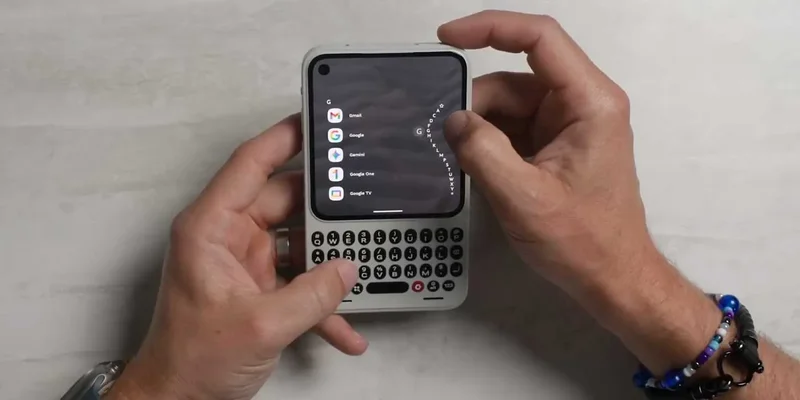
Still, phones are getting fun again. Samsung is bringing it on the hardware front; if the Pixel 11 leaks are anything to go on, Google appears to be cooking on the mobile AI front; and products like the Clicks Communicator, Sidephone, Light Flip, and MindOne are finding success by leaning into weird niches.
If component costs weren’t causing prices to rise uncontrollably, it would be a pretty great time to revive the evening phone for a new generation.
✉️ Inbox
- The Pixel 11 will be a perfect storm of bad timing. If you haven’t already, you should read Ben’s Weekender newsletter about the confluence of factors that are leading this Pixel release cycle to be an absolute mess, even if it’s not exactly Google’s fault.
- First Googlebooks from Lenovo leak: Two sizes and 2-in-1 tablet. We’ve been waiting a while for the first glimpse of Google’s upcoming Chromebook replacement, and Lenovo’s initial offerings appear both attractive and feature-filled. My concern is price: how will Google’s partners be able to justify charging the premium this hardware warrants when both Apple and Microsoft are working to lower the entry price of macOS and Windows 11 hardware?
- Gemini will create mobile & desktop apps in the future as AI Studio for Android, iOS is canceled. I was pretty psyched for AI Studio, Google’s multi-platform vibe-coding app, but I’m not surprised that it’s been canceled as Gemini moves to compete with ChatGPT and Claude as an “everything app.”
- Galaxy Z Fold 8 is a smash hit; shipping dates slip, 3x higher pre-orders than Fold 7. The Fold 8 is very good, but it’s also proving to be extremely popular. Shipping dates have been pushed back weeks and Samsung is already taking a victory lap.
- Galaxy S27 Ultra reportedly ditches a telephoto camera for the sake of cost-cutting. I saw this coming a mile away: Samsung is dropping the most useless camera from the S27 Ultra. Hopefully it foretells an improved 5x tele into the bargain.
- Google Clock 9.0 adds stopwatch and timer Live Updates. One of the best use cases for Android’s version of Live Activities just arrived, boring as it may seem.
- Notability app makes the jump from iOS to Android, and it’s 25% off to celebrate. I like Notability a lot, though I no longer use it on my Mac (Craft is more complex but has a better feature set). Still, it’s always good to see an Android port of a popular Apple-only app, and this one appears better than most.
- Google rolling out Android 17 QPR2 Beta 2 for Pixel. The second beta of the December Android/Pixel update just arrived, but we haven’t found many user-facing features so far.
- OnePlus 15 and more have fully sold out in the US following shutdown. Womp, womp.
🤑 Action items
Over the past few weeks, I’ve become enamored of Docker and its seemingly limitless ability to host a variety of useful tools siloed away from the day-to-day workings of my desktop. With a little help from my trusty Synology NAS and a bunch of how-to guides, I’ve managed to install a number of useful tools like AdGuard, Home Assistant, Mealie and Calibre Web alongside a bunch of vibe-coded web apps I’ve been able to make accessible from practically anywhere using Tailscale.
Most of these tools are well known in the self-hosting community, but it wasn’t until I started playing around with building my own apps that I ran into them, largely because I wanted a way to deploy them without putting them on the public internet. Tailscale, a mesh VPN tool, connects any device running the client directly to another, which makes my NAS accessible to my laptop, phone, and desktop without routing all of their traffic through the public internet. It gives my dinky suite of personalized apps a presence just for my devices, and so far it’s proven incredibly useful, particularly over this past week when I was relying on them remotely.
I’m just scratching the surface of this world, and that’s genuinely exciting to me. If you have any recommendations for self-hosted services you use on a regular basis, let me know and I’ll share them in a future segment.
🙃 FWD:
This section has some of our favorite stuff from around the internet. Great videos, weird memes, fun reads, recommended apps, whatever. Send us your recommendations!
I love many things about my home country, and the province of Newfoundland and Labrador, with its windswept vistas and jovial citizens, is right at the top.
That’s why I found this story of an abandoned fish sauce factory so distressing; hundreds of St. Mary’s residents have been dealing with the stench of rotting capelin for the past 25 years.
It took that long for a $2 million budget to be approved by the province to remove 900,000 liters (237,000 gallons) of fermenting fish sauce from the degrading vats and shattered bottles littering the complex that employed roughly 50 people between 1990 and 2001.
Now trucks will start hauling it to a nearby town’s landfill where, once combined with peat to make it solid, it will be buried like a very polite form of nuclear waste for the rest of eternity.
This Eater story from 2019 goes deep on the Atlantic Seafood Sauce debacle, and this fantastic follow-up piece from Defector (which is where I found out about the news) interviews a food scientist about why we love fish sauce so much in the first place.
🗑️ Trash
On Thursday, July 30th, Google Earth added a feature that let anyone prompt Nano Banana, Google’s AI image generator, to alter images of real-world satellite images.
In the blog post about the tool, Google justified it as a way to “bring history to life” by “help[ing] students visualize the past instead of just reading about it” (because who wants to read anymore?). But within hours, folks had started testing Google’s prompting limits.
One data researcher created a host of AI-generated images, including fake refugees massing at the real Mexican border, and a fake bomb crater near a real hospital in Gaza. Another less controversial example showed the Statue of Liberty riding the Sphinx like a horse.
Google initially responded to the onslaught of fake images by claiming that “every image created with Nano Banana in Google Earth includes the SynthID digital watermark, so if someone is unsure about an image, they can ask the Gemini app or use Lens in Search to see if the image was Al-generated.”
Soon afterwards, though, the feature was rolled back completely:
Re: our statement on Image Generation in Google Earth:
“We know that people uniquely trust Google Earth for a reliable view of the world. We’ve seen geospatial professionals using this feature for a range of useful purposes, however we’ve also seen people sharing screenshots of generated imagery that appear to violate our policies. So we’re rolling back this feature in Google Earth while we work on implementing stronger guardrails. It’s important to note that generated images didn’t appear in the main Google Earth experience for others to see and were watermarked as AI generated.”
That Google didn’t see the potential for abuse in its tool shows how product managers are prioritizing novel ways of adding AI to existing tools without considering the long-term consequences. And in this case, it appears the tool will return. But even with stronger guardrails it will further damage the trust in the images Google Earth has spent 20 years curating.
Like what you just read? Subscribe to Inbox today and get it in your email every Tuesday and Thursday morning. Got feedback? Send us an email.
You can also support us by becoming a 9to5Google Pro member, starting at just $5/month. You get bonus podcast episodes, access to our members-only Discord server, and lots more.
Thanks for reading, and have a great day. See you on Thursday!