We may earn revenue from the products available on this page and participate in affiliate programs. Learn more ›
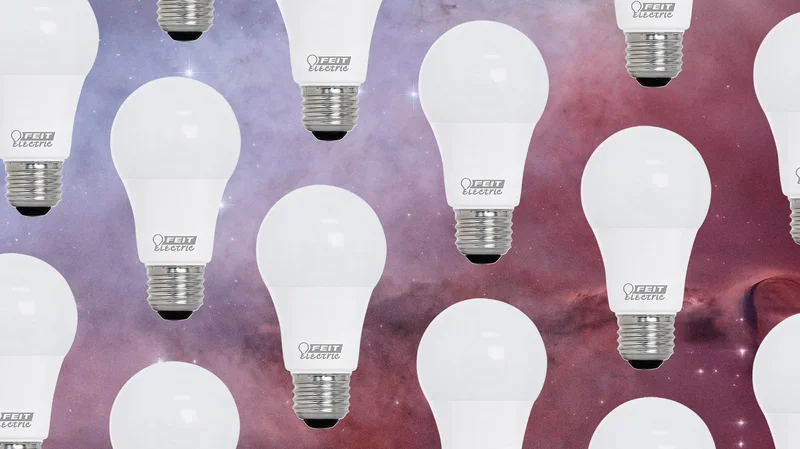
We don’t think about light bulbs until they burn out. But, tweaking the bulbs in your home can change the whole feel of the place. After tons of testing, spec comparison, reading editorial reviews, and surveying user feedback, we’ve chosen the Feit Electric Enhance A19 as the LED light bulb we’d screw into almost every socket in the house. It renders color at a 90+ CRI, a spec that used to cost real money, and sells for about $4.70 per bulb as of August 2026 (often less at big-box stores). If your lights live on dimmers, the Philips Ultra Definition A19 is the one to buy instead, rated by Philips to fade from soft white down to a 2200K candlelight glow. Plenty has changed since our last update: the EPA retired Energy Star certification for ordinary bulbs at the end of 2024, high color accuracy got cheap, and smart bulbs have grown into a category that deserves (and is getting) its own guide. This one is for people who want excellent regular light bulbs that turn on when you flip the switch.
- Best overall:Feit Electric Enhance A19 LED Light Bulb
- Best dimmable:Philips Ultra Definition A19 LED Light Bulb
- Best color rendering:GE Sun Filled A21 LED Light Bulb
- Best recessed:Feit Electric Enhance BR30 LED Light Bulbs
- Best 100W equivalent:Sylvania TruWave A21 LED Light Bulb
- Best candelabra:Philips Ultra Definition B11 Candelabra LED Light Bulbs
- Best value:Amazon Basics LED Light Bulbs
- Best splurge:Waveform Lighting Centric Home A19 LED Bulb
How we chose the best LED light bulbs
We started with the A19 shape at 800 lumens, the 60-watt equivalent that fits most household fixtures, then added the shapes people actually need: BR30 floods for recessed cans, a brighter A21 (a slightly larger bulb shape, not a wattage class), and candelabra bulbs for fixtures with the skinny E12 base. Color accuracy was the bar that mattered most this time around. Bulbs rated at 90+ CRI now cost within a dollar or two of the 80 CRI basics, so we treated high CRI as the default rather than a luxury. To be clear about method: we did not conduct laboratory testing for this guide, but unless you have robotic eyes that measure delta E, that’s not super useful information for you.
Recommendations are based on real world experience, as well as manufacturer specification sheets, retailer listings we checked in August 2026, and recurring complaint patterns in owner reviews. Where a number is a manufacturer’s claim rather than an independent measurement, we say so, and dimming behavior in particular varies with the switch and fixture you own. One filter we dropped: Energy Star. The EPA retired its certification for ordinary replacement bulbs on December 31, 2024, so the logo on a box reflects the old program, not a current endorsement. If you want a deeper primer before you shop, we have a whole guide to buying the right lightbulb.
The best LED light bulbs: Reviews & Recommendations
Most conventional incandescent bulbs left store shelves under the federal efficiency rule in force since July 2023 (specialty categories like oven and appliance bulbs are exempt), and the Department of Energy has finalized stricter standards for 2028. LEDs won. The upside is that the winners keep getting better: the replacements below generally offer better color rendering, smoother dimming, or lower per-bulb prices than the bulbs they pushed out of this guide. If you’re after app-controlled, color-changing bulbs instead, hold tight for our dedicated smart bulb guide, or browse our current favorite smart home devices.
Best overall: Feit Electric Enhance A19 LED Light Bulb
Pros
- 90+ CRI color accuracy at a commodity price
- Dimmable
- Damp-rated and enclosed-fixture rated
- 25,000-hour rated life
Cons
- Amazon price fluctuates; often cheaper at big-box stores
- Some owner reports of flicker on incompatible dimmers
Specs
- Wattage equivalent: 60 watts
- Bulb shape: A19 (E26 base)
- Color temperature: 2700K (3000K and 5000K sold separately)
- CRI: 90+
The Feit Electric Enhance A19 hits the sweet spot of the entire category: 90+ CRI color accuracy for about $4.70 per bulb as of August 2026, and often less at big-box hardware stores. If color matters to you, that CRI number is the first thing to check on the box. Basic LED bulbs render color at around 80 CRI, which can leave a freshly painted wall looking slightly wrong and skin tones washed out; the Enhance line generally renders those colors more faithfully, for a small premium over the bargain bin. I have been using this model in my home for the past year and they have performed very well.
The rest of the spec sheet holds up. This exact four-pack is the fixed 2700K soft white version with a standard E26 base (the 3000K and 5000K daylight versions are separate listings), and each bulb draws 8.8 watts to produce 800 lumens. Feit rates it for damp locations like a bathroom ceiling (damp-rated means moisture, not direct water contact), for enclosed fixtures, and for 25,000 hours of use, which works out to more than two decades at three hours a day.
A handful of owners report flicker when these bulbs sit on dimmers. An incompatible dimmer is a frequent suspect, though bulb drivers and wiring can contribute, so check Feit’s compatibility notes if yours misbehaves (more in the dimming section below). Beyond that, shop around: Amazon’s price on this four-pack moves around, and big-box stores frequently beat it, so check a local shelf before you order eight. If you’re replacing a houseful of bulbs and want all of them to just look right, start with the Feit Enhance.
Best dimmable: Philips Ultra Definition A19 LED Light Bulb
Pros
- CRI 95 stated right on the spec sheet
- Philips-rated dim-to-warm, from 2700K down to 2200K
- Sold and shipped by Amazon for less than $4 per bulb
Cons
- 3.7-star Amazon average as of August 2026
- Dim-to-warm depends on dimmer compatibility
Specs
- Wattage equivalent: 60 watts
- Bulb shape: A19 (E26 base), frosted glass
- Color temperature: 2700K, dims to 2200K
- CRI: 95 (stated on listing)
Dimming is where cheap LED bulbs go to embarrass themselves, and it’s where the Philips Ultra Definition A19 earns its slot. Most LEDs hold the same color while they fade, which is why a dimmed living room can feel like a dentist’s office at midnight. Philips rates this bulb to slide from 2700K down to 2200K as you pull the dimmer, mimicking the warmer-colored light an incandescent gives off as its filament cools while dimming.
The listing backs the rest with numbers printed on the spec sheet: 800 lumens from 8 watts, a stated CRI of 95 (second only to the GE Sun Filled’s claimed number in this guide), a frosted envelope that diffuses the individual LED filaments and cuts glare in exposed fixtures, and Philips’s EyeComfort flicker-free designation. (Amazon’s title calls the glass clear; Philips’s own spec sheet for this model, the 576116, says frosted.) Sold and shipped by Amazon at $11 to $14 for a four-pack in our August 2026 checks, it also undercuts many of the basic dimmables it outclasses on paper.
One honest caveat: this listing carries a 3.7-star average across more than 2,000 ratings as of August 2026, worse than its specs deserve at face value, and worth a skim before you buy for a whole room. Dim-to-warm behavior also depends on your dimmer, so check Philips’s compatibility list rather than trusting the word “dimmable” on an old switch. On a compatible LED dimmer, the Philips Ultra Definition A19 gives your living room back the sunset fade that incandescents took with them when they left.
Best color rendering: GE Sun Filled A21 LED Light Bulb
Pros
- GE-rated 97 CRI, among the highest sold at retail
- Full-spectrum design with a reduced blue peak, per GE
- Dimmable
Cons
- One- and two-packs only, so a full room adds up
- Larger A21 shape won’t fit every shade or fixture
Specs
- Wattage equivalent: 60 watts
- Bulb shape: A21 (E26 base)
- Color temperature: 2700K soft white (also 5000K daylight)
- CRI: 97 (GE’s rating)
The GE Sun Filled A21 is one of the most color-accurate bulbs you can buy at retail. GE rates it at 97 CRI, about as close to the scale’s ceiling of 100 as consumer LEDs get, with a full-spectrum design the company says fills in the gaps standard LEDs leave in their output rather than leaning on a strong blue peak.
That makes it the bulb for the places you actually look at things: the lamp you read under, the mirror where you do your makeup, the wall where the art hangs. GE also markets the reduced blue spike as friendlier before bed; treat that as the company’s claim, since how light affects alertness depends on brightness, timing, and duration as much as spectrum. The Sun Filled draws 10.5 watts to produce 840 lumens, dims, and comes in soft white or daylight, sold in one- and two-packs.
Per-bulb price is the limiter: $9.99 for a single as of August 2026 means nobody is doing a whole house in these, and the slightly taller A21 envelope can crowd small shades. For the two or three sockets that light your reading, your work, or your face, the GE Sun Filled is where we’d spend it.
Best recessed: Feit Electric Enhance BR30 LED Light Bulbs
Pros
- Same 90+ CRI as our best overall pick
- Dimmable
- Wide flood face built for downlighting
Cons
- 650 lumens in both color temperatures; there is no brighter variant
Specs
- Wattage equivalent: 65 watts
- Bulb shape: BR30
- Color temperature: 2700K (also 5000K)
- CRI: 90+
Most standard recessed cans look and light best with a flood-shaped bulb, and the Feit Electric Enhance BR30 brings the same 90+ CRI as our best overall pick up to the ceiling. An A19 in a recessed socket throws light where the housing swallows it; the BR30’s wide face pushes it down into the room. One check before you buy: smaller trims and cans with integrated retrofit modules take different hardware, so measure the opening first.
The four-pack comes in 2700K soft white with a 5000K daylight version available. Both are rated at the same 650 lumens, so pick by color preference rather than brightness; daylight can read crisper, but it is not putting out more light. The bulbs are rated dimmable on LED-compatible switches.
We retired our previous recessed pick, GE’s Reveal R30 6-pack, after its Amazon listing collapsed into third-party sellers charging roughly triple the going rate, with owner reviews reporting short lifespans and a pink cast when dimmed. For kitchens and hallways lined with cans, the Feit Enhance BR30 keeps every fixture matched, in both color temperature and color accuracy.
Best 100W equivalent: Sylvania TruWave A21 LED Light Bulb
Pros
- Selectable color temperature, 2700K through 5000K
- 1,600 lumens from 15 watts
- Five-year limited warranty from LEDVANCE
Cons
- Sold as a 2-pack only
Specs
- Wattage equivalent: 100 watts
- Bulb shape: A21 (E26 base)
- Color temperature: Selectable: 2700K, 3000K, 3500K, 4000K, 5000K
- CRI: 90 (LEDVANCE catalog)
When one socket has to light a whole room (a garage, a stairwell, the single overhead fixture in an older bedroom), the Sylvania TruWave A21 replaces a 100-watt incandescent with 1,600 lumens from 15 watts. It’s also the only bulb in this guide that lets you pick your color temperature after you buy: a selector switch on the bulb itself toggles between five settings from 2700K soft white to 5000K daylight, so one two-pack covers rooms with different jobs.
TruWave is the flagship line from Sylvania (now part of LEDVANCE), built around what the company specs as high-CRI output with a softened blue spike; the LEDVANCE catalog lists this model, the 42110, at 90 CRI, though the Amazon listing itself doesn’t state one. LEDVANCE also backs it with a five-year limited warranty, subject to its usage and installation conditions, which counts for extra in the 100-watt-equivalent class, where pushing more light through the same envelope makes heat management harder and no-name multipacks dominate the search results.
It sells as a two-pack for $19.77 direct from Amazon as of August 2026, so treat it as a bulb for the two or three sockets that earn it rather than a whole-house buy. If a room always feels like a cave no matter what you screw in, this class of bulb is the fix, and the Sylvania TruWave A21 is the current model we’d put in the socket.
Best candelabra: Philips Ultra Definition B11 Candelabra LED Light Bulbs
Pros
- Warm Glow dimming from 2700K toward 2200K, per Philips’s spec sheet
- CRI 95 stated on the listing
- 9-pack sized for a full chandelier
Cons
- 40W equivalent (300 lumens per bulb) is modest by design
Specs
- Wattage equivalent: 40 watts
- Bulb shape: B11 (E12 candelabra base)
- Color temperature: 2700K, warming toward 2200K when dimmed
- CRI: 95 (stated on listing)
Chandeliers and wall sconces take the skinny E12 candelabra base, and the Philips Ultra Definition B11 is the rare small bulb that gets the same flagship treatment as the full-size models: a stated CRI of 95, Philips’s flicker-free designation, and a clear envelope that looks right in fixtures where the bulb is part of the look. Better still, Philips’s spec sheet for this model (the 588533) lists Warm Glow dimming, easing from 2700K toward 2200K as you dim, which is exactly the range a dining room chandelier wants.
Each bulb is a 40-watt equivalent producing 300 lumens, typical for exposed candle fixtures where glare matters more than raw output, and the 9-pack ($29.99, or about $3.33 per bulb, as of August 2026) matches how these fixtures get used: many chandeliers take five or more bulbs, and mismatched candelabra bulbs are instantly visible. If you only need one bulb for a single sconce, the pack is admittedly more Philips than you asked for. For anyone re-bulbing a whole chandelier, the Ultra Definition B11 is the set we’d buy.
Best value: Amazon Basics LED Light Bulbs
Pros
- About $2 per bulb in the six-pack as of August 2026
- 4.7-star average across more than 5,000 ratings
- Dimmable, which is unusual at this price
Cons
- 10,000-hour rated life is the shortest in this guide
- 80 CRI
- One independent test of a single sample measured pronounced 120Hz flicker
Specs
- Wattage equivalent: 60 watts
- Bulb shape: A19 (E26 base)
- Color temperature: 2700K
- CRI: 80
At about $2 per bulb in a six-pack as of August 2026, the Amazon Basics 60-watt-equivalent A19 is the cheapest bulb we’d put our name on. It holds a 4.7-star average across more than 5,000 ratings, ships from and is sold by Amazon itself rather than a third-party seller, and, unusually for this price, it’s dimmable.
The compromises are printed right on the listing: 80 CRI and a 10,000-hour rated life, the shortest of any pick in this guide. Rated life is a projection of light output over time rather than a guarantee, and driver electronics can fail before the LEDs themselves noticeably fade. One independent test of a single sample also measured pronounced 120Hz flicker, so if you’re sensitive to flicker or planning to dim these, buy one pack before you buy four. They belong in the closet, the basement stairway, the garage, and the rental you’re re-bulbing on the way out.
This slot previously belonged to the Sylvania ECO, which is still fine if you find it cheap on a shelf; LEDVANCE’s 2026 catalog lists the ECO family as discontinued with remaining inventory, so we’ve moved on rather than recommend a closeout. Stock the Amazon Basics anywhere the light just needs to turn on, and spend up on the Feit Enhance for the rooms where you actually live.
Best splurge: Waveform Lighting Centric Home A19 LED Bulb
Pros
- CRI 95+ with an R9 (deep red) score above 80, per Waveform
- Flicker under 1 percent by Waveform’s measurement
- Three-year warranty and 25,000-hour rating
Cons
- $28 for a single bulb
- Not dimmable, and not rated for enclosed fixtures
Specs
- Wattage equivalent: 60 watts
- Bulb shape: A19 (E26 base)
- Color temperature: 2700K or 3000K
- CRI: 95+ (Waveform’s spec)
The Waveform Lighting Centric Home is the bulb that color-obsessed people buy with their own money. At $28 for a single A19, it costs several times our top pick, and for judging paint, fabric, or prints under warm household light, Waveform’s published specs justify the gap: CRI 95+ with an R9 (deep red) score above 80, an important supplemental indicator for deep reds and natural-looking skin tones, plus flicker the company measures at under 1 percent. Most bulbs don’t publish either number.
The 10-watt, 800-lumen Centric Home comes in 2700K or 3000K, carries a three-year warranty and a 25,000-hour rating, and sells direct from Waveform’s own store rather than Amazon. It is not dimmable, isn’t rated for enclosed fixtures, and a warm bulb alone won’t make a color-managed workspace; for daylight-balanced color work, Waveform sells a separate Centric Daylight line. Think of this one as an upgrade for a single important lamp: for the desk or easel where color decisions get made, the Centric Home is the splurge that makes sense.
What to consider when buying the best LED light bulbs
Bulb shopping got more interesting while nobody was looking. The specs that mattered in 2023 (lumens, color temperature, dimmer compatibility) still matter, but color accuracy has become affordable, the Energy Star logo is gone from ordinary bulb packaging, and federal efficiency rules are set to tighten again in 2028. Here’s what actually deserves your attention before the “add to cart” click:
Usage
The room and fixture decide the shape and output. For overhead fixtures and lamps, an 800 to 1,100-lumen A19 covers it, and an A21 (the same shape, slightly larger) is where most 100-watt-equivalent bulbs live. Recessed cans generally want a BR30 flood in the 650-lumen range, since the reflector shape pushes light down instead of sideways, though smaller cans and integrated retrofit trims take different hardware; track heads more often take PAR20 or PAR30 bulbs, which throw a tighter, more controlled beam. Chandeliers and sconces take E12 candelabra bulbs in the 300 to 500-lumen range, and outdoor floodlights typically want 700 to 1,300 lumens with a damp or wet rating matched to the location (damp handles moisture; direct water exposure needs a wet rating).
Brightness and temperature
Brightness is measured in lumens; watts only tell you how much electricity the bulb drinks. If you still think in incandescent terms, the conversions are worth memorizing:
- 800 lumens replaces a 60-watt bulb
- 1,100 lumens replaces a 75-watt bulb
- 1,600 lumens replaces a 100-watt bulb
Color temperature is measured in Kelvins, and residential bulbs cluster in three tiers: 2700K (“soft white” or “warm white”) for bedrooms and living rooms, 3000K (“warm white” or “bright white,” depending on the brand) for kitchens and bathrooms, and 5000K (“daylight”) for workspaces and garages. Most people find warmer light relaxing and cooler light better for focus, though responses vary; matching the temperature of every bulb in one room matters more than the exact number you pick. Manufacturers print both the lumen count and a wattage equivalent on the box, so no mental math is required.
Color accuracy (CRI)
CRI, or color rendering index, measures how accurately a bulb shows color on a scale with a maximum of 100 (scores for poor sources can even go negative), where 100 means the bulb matches a reference light source at the same color temperature. The standard CRI number is an average across eight relatively muted test colors, so it’s useful but incomplete: two bulbs with the same CRI can render saturated colors differently. Basic LEDs score around 80, which is fine until you notice your walls, food, and face all look slightly off; bulbs rated 90+ generally render them more faithfully, and the price gap has collapsed to a dollar or two per bulb, which is why most of our picks clear 90. The spec to watch beyond CRI is R9, the deep-red score that isn’t part of the average and that most brands don’t publish. Strong R9 helps deep reds and skin tones look natural, and it’s a big part of what you’re buying in a premium bulb like the Waveform Centric Home or GE’s Sun Filled.
Dimming
LED dimming failures often come from an incompatible bulb-and-dimmer pairing rather than a defective bulb. Dimmers designed for incandescent loads expect far more wattage than an 8-watt LED draws, and the mismatch produces flicker, buzz, or a bulb that won’t dim below halfway. If your dimmers predate your LEDs, replace them with LED-compatible models, and check the bulb manufacturer’s tested-compatibility list rather than trusting the word “dimmable” on either box. LED-compatible dimmers come in forward-phase and reverse-phase (trailing-edge) designs; reverse-phase models often deliver a wider, quieter dimming range, but plenty of bulbs work fine on forward-phase, which is why the compatibility list beats the label. From there: non-dimmable bulbs (like our Waveform splurge pick) don’t belong on a dimmer circuit at all, where they may flicker, buzz, or fail early, and dim-to-warm bulbs like the Philips Ultra Definition reward a compatible dimmer with a color shift that makes dimming worth doing.
Efficiency rules after Energy Star
The Energy Star label is no longer part of ordinary bulb shopping. The EPA retired its certification for standard replacement bulbs on December 31, 2024, judging that federal efficiency rules had made it redundant (a separate Energy Star specification continues for integrated LED downlights), and in March 2026 the Department of Energy became the program’s lead federal agency under a new agreement with the EPA. A logo on a bulb box reflects certification under the retired program, not a current endorsement. The regulatory floor is what matters now: DOE prohibits the sale of covered general-service lamps that produce less than 45 lumens per watt (full retail enforcement began in July 2023), the rule that effectively ended conventional incandescents, and DOE has finalized output-dependent standards exceeding 120 lumens per watt for the most common household bulbs, applying to lamps manufactured or imported starting July 25, 2028. Bulbs already in your house or on store shelves stay legal. Run today’s spec sheets against those formulas, though, and most bulbs on this page (typically 80 to 110 lumens per watt) would need redesigns before then. That’s our arithmetic rather than a certification ruling, but expect the market to churn again as the deadline approaches; DOE’s own analysis found lamps with CRI in the 90s at its highest analyzed efficiency levels, so better efficiency shouldn’t have to mean worse color.
FAQs
Q: Is Energy Star still a thing for light bulbs?Mostly no. The EPA retired its Energy Star specifications for ordinary replacement bulbs on December 31, 2024, so a logo on a bulb box reflects certification under the retired program rather than a current endorsement. A separate Energy Star specification continues for integrated LED downlights, and as of March 2026 the program runs with the Department of Energy as lead federal agency under an agreement with the EPA. Judge bulbs by lumens, color temperature, CRI, and rated lifespan instead.
Q: Are incandescent light bulbs still banned?Effectively yes, for ordinary household bulbs. Most conventional general-service incandescent and halogen bulbs can’t meet the federal 45-lumens-per-watt minimum, so they can no longer legally be sold as covered general-service lamps (full retail enforcement began in July 2023). Specialty categories, including appliance, oven, colored, plant, and sign lamps, remain exempt. The Department of Energy has also finalized stricter output-dependent standards exceeding 120 lumens per watt for the most common bulbs, applying to lamps manufactured or imported starting July 25, 2028.
Q: What is CRI, and what counts as a good score?CRI (color rendering index) measures how accurately a bulb reveals color on a scale with a maximum of 100, averaged from eight muted test colors; 100 means the bulb matches a reference source at the same color temperature. Around 80 is basic and fine for utility spaces; 90+ generally renders skin, food, and wood more faithfully, and now costs only slightly more. Two bulbs with the same CRI can still render saturated colors differently, which is why the separate deep-red R9 score is worth checking on premium bulbs.
Q: How many lumens do I need to replace a 60-watt bulb?800 lumens is the standard 60-watt equivalent. For a 75-watt bulb look for about 1,100 lumens, and for a 100-watt bulb about 1,600 lumens. An LED hits those numbers on roughly 8 to 15 watts of actual draw, and manufacturers print the equivalent wattage on the box.
Q: What color temperature should I use in each room?Use 2700K (soft white) in bedrooms and living rooms, 3000K in kitchens and bathrooms, and 5000K (daylight) in offices, garages, and workspaces. Most people find warmer light relaxing and cooler light better for focus, though individual responses vary. Matching the temperature of every bulb in one room matters more than the exact number you pick.
Q: Why do my LED bulbs flicker on a dimmer?An incompatible dimmer is a common culprit: dimmers designed for incandescent loads expect far more wattage than an LED draws. Swapping in an LED-compatible dimmer, checked against the bulb maker’s compatibility list, often fixes flicker and buzz, though bulb drivers, loose connections, and smart-switch conflicts can also cause it. Also confirm the bulb is marked dimmable; a non-dimmable LED on a dimmer circuit may flicker, buzz, or fail early.
Q: How long do LED light bulbs really last?Rated lifespans on our picks run from 10,000 hours on budget bulbs to 25,000 hours on bulbs like the Feit Enhance, roughly nine to 22 years at three hours of use per day. Treat those ratings as projections of light output over time rather than guarantees; the driver electronics often fail before the LEDs fade, and heat accelerates both, so a bulb headed into an enclosed or unventilated fixture should carry an enclosed-fixture rating.
Q: Are CFLs still worth buying?No. A growing list of states, including California, Colorado, Hawaii, Illinois, Maine, Minnesota, Oregon, Rhode Island, and Vermont, already restricts the sale of most screw-base general-service CFLs because they contain mercury; Illinois extends its restriction to pin-base CFLs and linear fluorescent lamps in 2027, and specialty lamps carry exemptions. Most covered general-service CFLs can’t meet the 2028 federal efficiency standards either, and modern LEDs generally beat them on efficiency and instant-on performance, with a far wider selection of high-color-quality models.
Q: Are expensive LED bulbs worth the money?For the rooms where you read, work, or look in a mirror, yes. The jump from 80 CRI to 90+ CRI now costs a dollar or two per bulb and is immediately visible on skin and wood tones. Past that, a $28 specialist bulb like the Waveform Centric Home only makes sense for color-critical work; for everything else, a $2 bulb in the closet is money well saved.
Final thoughts on the best LED light bulbs
- Best overall:Feit Electric Enhance A19 LED Light Bulb
- Best dimmable:Philips Ultra Definition A19 LED Light Bulb
- Best color rendering:GE Sun Filled A21 LED Light Bulb
- Best recessed:Feit Electric Enhance BR30 LED Light Bulbs
- Best 100W equivalent:Sylvania TruWave A21 LED Light Bulb
- Best candelabra:Philips Ultra Definition B11 Candelabra LED Light Bulbs
- Best value:Amazon Basics LED Light Bulbs
- Best splurge:Waveform Lighting Centric Home A19 LED Bulb
The short version: put the Feit Electric Enhance A19 in most sockets, the Philips Ultra Definition A19 anywhere a dimmer lives, and the Amazon Basics six-pack anywhere the light just needs to work. Great color used to be the expensive part of LED lighting; now it costs a couple dollars per bulb over the cheap stuff. The bulbs finally caught up to the fixtures. Your move.