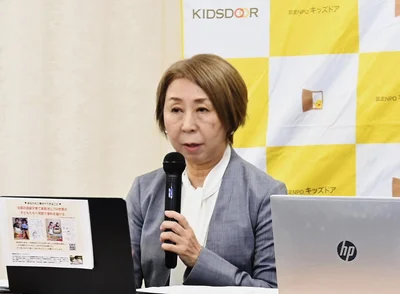
Low-income families in Japan are reducing their children’s food intake and restricting air-conditioning use as rising prices deepen financial pressure during the school summer holidays, according to a survey by nonprofit Kidsdoor.
The Tokyo-based organization surveyed households registered with its family support program from June 1 to June 8, and received valid responses from 1,449 households. More than 90% were single-parent families.
Among 1,012 households with elementary or junior high school children, 64% said the loss of school lunches during summer vacation would force them to reduce the amount of food served at each meal. About 61% expected more days when they could not afford meat or fish, while 44% said their children would be less likely to eat three meals a day.
Food insecurity was already widespread before the break. Financial difficulties meant 57% of respondents had days when their children could not eat enough, while 19% said this happened almost every day.
The situation was most severe among households with annual income below ¥1 million ($6,154). In that group, 31% said children were unable to eat enough almost every day. More than 30% of those households also said their children were thinner or shorter than others of the same age.
Parents reported that being unable to feed their children enough caused adverse health effects in their children, including irritability, restlessness, frequent illness, anemia and generally poor health.
Families are also cutting cooling costs despite extreme summer temperatures. Of all respondents, 38% said they planned to significantly restrict air-conditioning use even when it was needed, while 6% said they would hardly use it at all.
The financial strain is also affecting parents’ mental health, with 44% saying they always or often feel extremely depressed when thinking about summer vacation. Half of those parents said they either spoke to no one about their concerns or had no one to consult with.
In a news release accompanying the survey results, Kidsdoor called for targeted cash and food support, particularly for households earning less than ¥1 million, as well as access to meals and air-conditioned public facilities during school closures.