For Londoners living around Greenford Tube station, tiptoeing through floodwater to get to work was a part of their daily routine. The ticket hall found itself inundated after a heavy downpour with neighbourhoods flooded and sandbags routinely deployed to make way.
The local council of Ealing, a borough in West London faced the daunting reality every year and yet struggled to come up with a solution. Initially, they planned on spending millions on expensive engineering works to create an artificial reservoir to solve the problem. That was before conservationists shared another idea. Until five beavers came along and fixed the problem for free. âWhy donât we try a nature-based solution? Why don't we bring back beavers?" asked Sean McCormack, a vet and conservationist with the Ealing Beaver Project.
Pushed outside their own world
These animals that were once native to Britain were hunted to extinction during the 16th century
In Henry IV Part 1, Vernon refers to the clothing of young Harry saying, "I saw young Harry, with his beaver on..." There are numerous other references to the large, semi-aquatic rodent known as beavers in Shakespeare's plays. This is because they had been plentiful in the country right up until his lifetime. Beavers were hunted for their fur, meat and castoreum, a substance produced by their anal scent glands that was used in products like perfumes.
These animals that were once native to Britain were hunted to extinction during the 16th century and have only recently started to be reintroduced to the land. They were reintroduced to Paradise Fields, a 10-hectare former golf course in Ealing borough in 2023.
In order to demonstrate how 'nature's engineers' could make London more climate resilient and life more easy, conservationists were granted a licence to release five of the animals along the stream running through the 24-acre land. This was the beginning of the Ealing Beaver Project. The project is a collaboration between Ealing Wildlife Group, rewilding organisation Citizen Zoo, the Friends of Horsenden charity and Ealing Council with support from Beaver Trust.
No more flooding
Earlier, the neighbourhoods flooded regularly and sandbags were routinely deployed to make way.
Beavers are amazing natural engineers. Their strong teeth, fortified with iron that makes them a unique orange colour, can chisel through sticks and trees. They eat the bark and use the wood to build dams, creating natural reservoirs. At Paradise Fields, the rodents got to work immediately, reengineering the landscape around Greenland with a series of dams which created a new lake almost overnight. They even dismantled an old dam built by volunteers and replaced it with a better one of their own. Incredibly, they still had time to breed, producing a litter within a year of arriving.
The project revealed that Greenford station, downstream from the animals' wetland home at Paradise Fields, has not flooded for three years in a row since they moved in. The beavers slow the flow of water during downpours and create wetlands that hold it back, easing pressure on the drainage system further downstream. These pools offer the beavers refuge from predators; for humans, they provide natural flood control.
Earlier, the river water took minutes to rush through the system into the tube station but now it seeps down through the series of dams and complex wetlands built by them. "They're slowing the flow when we have heavy rainfall events. They're sinking the flow as well into the ground because the ground here is wetter, even surrounding the river itself, and they're creating these complex wetlands that basically draw down that water and hold it for longer," said McCormack to the BBC.
âI just canât believe how much theyâve done in a short period of time, they basically said âstep aside, humansâ,â Åeniz Mustafa, Englandâs first urban beaver officer, who witnessed the animalsâ handiwork firsthand, told Positive News.âWe do make things a little bit hard for ourselves. It goes to show that we donât have to use heavy machinery or build infrastructure, nature can do it.â
Improved biodiversity
14 different species of butterflies, tadpoles, freshwater shrimps, toads, two new bat species and more have appeared.
Not just alleviating flooding, beavers have also boosted the biodiversity of the area. âWeâve had four new species in the last 11 months alone. One of them is the stickleback, which lives alongside dragonflies and damselflies. We also had red pole, which is a bird that only really stops off on migration,â said Mustafa.
14 different species of butterflies, tadpoles, freshwater shrimps, toads, two new bat species and more have appeared. âItâs interesting to see how other wildlife will just recolonise and return to a space.â
They also provide protection against extreme weather. The wetlands they create are helpful during droughts, as water can percolate into surrounding dry areas. Moreover, they also guard against wildfires as the land is essentially too wet to burn.
Ealing welcomes beavers
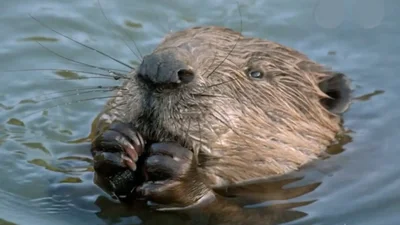
People of the area are embarking on beaver safaris to spot the adorable rodents
Beavers cannot be released anywhere. There needs to be enough food, water and space for them to build their wetland home. Humans near the site must also be receptive to the animals and there needs to be a contingency plan in case they get too close to human infrastructure. They can create problems for farmers and landowners since the tunnels they dig can be big enough to trap cattle and machinery. But the Ealing community has been receptive.
According to a CNN report, a dozen people approached McCormack asking about beaver sightings while men sat on a bench enjoying drinks and spotting beavers. Wildlife enthusiasts are even embarking on "beaver safaris." âWeâre demonstrating here that actually itâs not that wild an idea to live alongside beavers,â added McCormack.