Bolivia · Economy
Key Facts
—Who said it. Minister of the Presidency José Luis Lupo called the IMF deal “indispensable” on July 20, 2026.
—Program size. Bolivia is negotiating a package worth up to US$3.3 billion, likely an Extended Fund Facility.
—Dollar reserves. Foreign exchange reserves fell to US$2.3 billion by October 2025 as gas export revenue dropped 31%.
—Exchange rate. The government abandoned its 15-year fixed currency peg and adopted a floating rate on July 15, 2026.
—State firms. The IMF program targets transparency and efficiency reforms at loss-making state enterprises.
A Bolivia IMF agreement is “indispensable” to rescue the country’s dollar-starved economy, a senior official in President Rodrigo Paz’s administration said on July 20, directly linking the negotiations to the foreign-exchange crisis and mounting losses at state-owned companies.
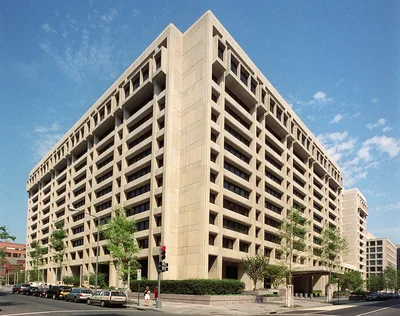
The IMF headquarters in Washington; Bolivia is seeking an agreement to ease its dollar crisis. (Photo internet reproduction)
One-stop reference
Company Intelligence
Every listed company in Latin America — financials, ownership and structure for 1,450+ companies across 26 exchanges, in one place.
RTAsk Rio TimesCost of living, safety, visas across Latin America›
Why a Bolivia IMF Agreement Is Now on the Table
José Luis Lupo, Bolivia’s Minister of the Presidency and chief of staff, told Radio Marítima that the financing-and-reform package is essential. He confirmed the government is seeking up to US$3.3 billion, likely through an Extended Fund Facility (EFF), a medium-term IMF program for countries with severe external imbalances.
The talks were formally confirmed on May 5, 2026. Bolivia’s last IMF arrangement was an US$800 million stand-by deal in 2010, a much smaller intervention when the economy was in a far stronger position.
The Dollar Crunch and the End of a Fixed Peg
Bolivia is suffering a severe dollar liquidity crunch. Foreign exchange reserves collapsed to US$2.3 billion by October 2025, roughly the same amount as the external debt falling due in 2026.
A 31% drop in natural-gas export revenues starved the country of dollars. For years, gas sales to Argentina and Brazil filled state coffers, but declining production and lower global prices have reversed that fortune.
On July 15, the government abandoned its 15-year fixed exchange rate of roughly 6.9 bolivianos per US dollar and adopted a floating rate to lure dollar deposits back into the banking system. The old peg had created a wide gap between the official rate and the street price of dollars, fueling a parallel market that drained formal reserves.
State-Firm Losses and Subsidy Cuts
Losses at state enterprises, especially in the energy sector, have deepened the fiscal deficit, which reached 2.1% of GDP in 2024. Declining gas production and weak exports slashed government revenue.
President Paz ended national fuel subsidies by decree in December 2025, causing gasoline prices to spike. Fuel and electricity subsidies had consumed nearly 18% of the national budget in 2024.
Lupo said the IMF program includes measures to improve transparency and efficiency at state firms. Annual inflation stood at 5.2% in 2024, a figure that may rise as subsidy cuts work through the economy.
Background: How Bolivia Reached This Point
For much of the early 2000s, Bolivia enjoyed a commodities boom driven by natural gas, which provided steady dollar income and allowed the government to maintain generous subsidies and a fixed exchange rate. That model began to fray as gas fields matured and investment in exploration lagged.
By the time President Rodrigo Paz took office in November 2025, the country was already burning through international reserves to defend the peg and pay for imports. The new administration inherited what it calls the deepest economic crisis in four decades, leaving an IMF agreement as one of its few remaining lifelines.
What It Means for Expats, Investors and Tourists
For foreigners living in or visiting Bolivia, the floating exchange rate means the cost of goods and services in dollar terms could become more predictable over time, though short-term volatility is likely. The end of the fixed peg also reduces the need to hunt for dollars on the parallel market.
Investors should watch the IMF negotiations closely: a signed program would signal a commitment to fiscal discipline and could unlock additional multilateral financing. However, subsidy cuts and currency adjustment may dampen consumer spending in the near term, affecting retail and service businesses.
What Comes Next
The IMF package aims to restore dollar liquidity, anchor inflation expectations, and support a current-account adjustment. It would also help bridge the US$2.3 billion in external debt payments due this year.
The Paz administration is framing the deal as the cornerstone of its response to the crisis. Success will depend on how quickly the floating exchange rate stabilizes and whether state-enterprise reforms deliver real savings without triggering social unrest.
Frequently Asked Questions
Why does Bolivia need an IMF agreement?
Bolivia faces a dollar shortage, depleted reserves of US$2.3 billion, and a fiscal deficit. The IMF deal would provide up to US$3.3 billion in financing and support structural reforms to stabilize the economy and meet external debt obligations.
What reforms is the IMF requiring?
The program is conditional on eliminating multiple exchange rates, pursuing disinflation, cutting subsidies, and improving transparency at loss-making state enterprises. These measures aim to reduce fiscal imbalances and restore market confidence.
When did Bolivia float its currency?
The government announced a floating exchange rate on July 15, 2026, ending a 15-year fixed peg of roughly 6.9 bolivianos per US dollar. The move is designed to resolve market distortions and encourage dollar deposits to return to the formal banking system.