July 21, 2026 — 7:30pm
Save
You have reached your maximum number of saved items.
Remove items from your saved list to add more.
AAA
Governments are often loath to set public policy targets. Miss them and you’ll spend years being reminded of it. Who can forget Bob Hawke’s “by 1990 no Australian child will be living in poverty” pledge, or Kevin Rudd’s promise during the 2007 election campaign to halve homelessness and offer supported accommodation to all rough sleepers by 2020?
Miss your target and then you become one … for endless snarks from opponents and advocates keen to remind you of your failure. What, then, do we make of Andy Burnham, Britain’s new prime minister, pledging to end rough sleeping as his first announcement in office?
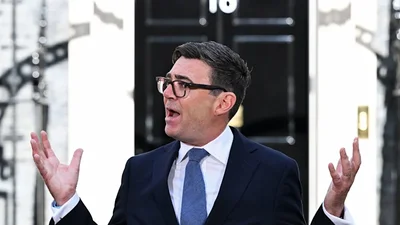
Britain’s newly minted Prime Minister Andy Burnham wants to make rough sleeping a thing of the past.Bloomberg
People are used to disappointment when it comes to political promises, but for most of us working in homelessness and homeless health half a world away, Burnham’s pledge is exhilarating.
Australia’s rough sleeping problem may not be on the same scale as Britain’s but there’s no question it’s getting worse. And while our governments – federal, state and territory – are committed to an enormous program of home-building, it will take a long time – decades – before outcomes trickle down to making a difference for people sleeping on the street.
I want to make the case for our prime minister taking a leaf out of Burnham’s book and making a similar rough sleeping pledge for Australia. If it means reducing our rough sleeping numbers, I’m all for giving the government the political cover it needs to make a similar effort.
Setting policy targets and making them public can have a positive impact. The truth is that failure against an ambitious target, rather than a timid or non-existent one, will often leave a greater legacy.
Let’s be clear. While the Hawke and Keating governments never abolished child poverty (and yes, I know Hawke swapped out “need” for “will” in his speech, but he said what he said), their reforms around family assistance payments made an enormous difference in its reduction.
And while Rudd never reached his homeless targets, his government still drove the largest co-ordinated Commonwealth homelessness investment in a generation.
Setting public targets is an essential part in mobilising governments, resources and bureaucracy in a focused effort against the complex social problems we often throw in the too-hard basket.
Our governments, as part of the National Housing Accord, have already committed themselves to the target of building 1.2 million well-located homes over five years to June 2029.
The challenge for those of us on the rough sleeping frontline is that the accord’s outcomes aren’t really geared for the people we work with. Supply is necessary – it’s addressing the single biggest structural driver of homelessness – but by itself, it’s insufficient.
Given that tackling homelessness is often regarded as a state and territory issue, the prime minister may think he doesn’t have the levers to back up any rough sleeping pledge.
But here’s how he could “do a Burnham”. The Commonwealth has already shown its willingness to lead national target-setting on housing supply, so why not also set a national “functional zero” rough sleeping target – the point where it becomes rare, brief and non-recurring – through national cabinet, mirroring the Housing Accord?
Right now, the Commonwealth’s main homelessness agreement with the states – the National Agreement on Social Housing and Homelessness – doesn’t set targets. It measures things: how many people ask for help or how many people are homeless overall.
We could attach an “end rough sleeping” target to it and connect at least some of its funding to its progress, creating real accountability.
The federal government might not own every lever on this issue, but it can use the ones it has to pull states and territories towards the same goal.
All the evidence, both in Australia and internationally, shows that homelessness is solvable with the right policy settings and a co-ordinated response that brings governments, service and communities together around a common goal.
The 2021 Census recorded around 7600 rough sleepers in Australia. Five years later, and without the COVID pandemic’s impact on the numbers, that figure is undoubtedly much higher.
But against a population of 28 million, ending rough sleeping is an eminently achievable goal. What better cause for the PM to harness Australia towards?
Erin Longbottom is National Director of Homelessness at St Vincent’s Health Australia.
Save
You have reached your maximum number of saved items.
Remove items from your saved list to add more.
Erin Longbottom is National Director of Homelessness at St Vincent’s Health Australia.