SINGAPORE - In Knowledge and Inquiry (KI) classes, students are asked a deceptively simple question: How do we know what we know?
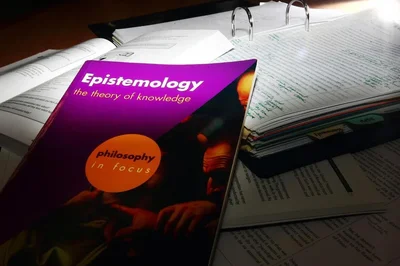
The subject explores epistemology - the study of how people gain, test and use knowledge - and challenges students to question knowledge and evidence that has been accepted as true.
Teachers and students say KI has taken on greater relevance in the age of artificial intelligence (AI), when convincing answers can be generated instantly.
The revised KI syllabus, which takes effect in 2027, reflects that shift.
Built around a framework of “cognition and conscience”, it aims to help students think more rigorously while considering the ethical implications of how knowledge is created and used in a world where AI increasingly blurs the line between human- and machine-generated content.
AI has made it easier to produce convincing answers, said K. Veerapandiyan, senior KI teacher at Temasek Junior College, but not necessarily genuine understanding.
This is where KI is particularly valuable, he said. “The subject is not just about acquiring knowledge, it is about understanding how knowledge is constructed, justified and applied.”
This means asking not just what is true, but why it is true, including making connections and spotting patterns, he added.
Tan Wah Jiam, 53, KI subject head at Hwa Chong Institution (HCI), said the subject grapples with timeless questions, including what a society accepts as “knowledge” and what an individual accepts as truth rather than mere opinion.
These questions are becoming more pressing as AI-generated text and images grow more prevalent.
“Seeing is believing” is no longer a reliable test, he said, adding that students need new ways of evaluating how to trust what they see online.
Still, he noted that the subject does not have a monopoly on these issues. For example, students taking science subjects must also learn how knowledge is produced and tested within their own fields.
Former KI student, who wanted to be known only as Ms Lim, 19, said she learnt from the subject that writing and the thinking process behind it will remain a human endeavour.
“The process of planning an essay, of thinking through a question, cannot be done by AI,” she said. “Only a human brain with human feelings can authentically express itself in the thoughts that we have.”
Lim added that learning how to think matters now more than ever.
For students considering taking the subject, Tan’s advice is to read widely and in long form, rather than relying on short-form video or summaries — a discipline he feels is increasingly rare, and essential to the sustained thinking the subject demands.
Resist the urge to settle too quickly on an answer, he said.
“Don’t be too certain of your ideas, or any idea that is presented to you. Sit with it for a while and invest time in thinking about it,” Tan said.
“Sometimes,” he added, “the journey is the point.”