MANILA, Philippines — The United States and Australia condemned China's actions in the South China Sea after a Filipino sailor was injured near Ayungin Shoal, as the latest clash threatened to overshadow ASEAN meetings in Manila.
Washington called on China to stop what it described as "dangerous and aggressive" actions against Philippine Navy personnel at Second Thomas Shoal, the international name for Ayungin Shoal.
"The United States condemns China's dangerous and aggressive actions against Philippine navy personnel at Second Thomas Shoal in the South China Sea on July 20, 2026, and calls on China to immediately cease its destabilizing conduct," State Department spokesman Tommy Pigott said in a statement.
"China's troubling pattern of provocation against lawful Philippine maritime operations undermines regional peace and stability and directly contradicts China's repeated commitments to resolve disputes peacefully," he added.
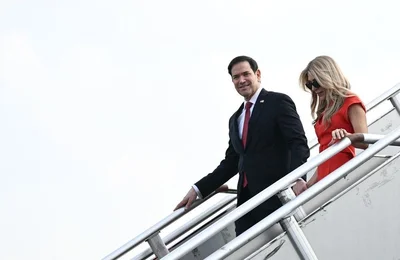
The statement came as US Secretary of State Marco Rubio arrived in the Philippines on Tuesday, July 21, to attend foreign ministers' talks with the Association of Southeast Asian Nations.
Before departing Washington, Rubio said he was open to the possibility of a sideline meeting with China's top diplomat Wang Yi, who was also expected in Manila.
Australia also condemned China's actions. Speaking at the Philippine Coast Guard headquarters in Manila, Australian Foreign Minister Penny Wong criticized Beijing's "destabilising and dangerous conduct" in the South China Sea after the clash between Philippine and Chinese sailors at the disputed shoal.
Wong condemned the "actions by Chinese vessels towards Philippines vessels we witnessed yesterday morning."
The Philippine military has accused the China Coast Guard of clubbing a Filipino sailor with a baton as they approached the BRP Sierra Madre, the grounded Philippine vessel that serves as Manila's outpost at Ayungin Shoal.
According to the Philippine statement, a Chinese boat carrying eight men circled and took images of the BRP Sierra Madre before the clash. The incident took place after two Philippine rubber boats were sent to drive away the Chinese group.
Beijing said the Philippines instigated the incident by sending men in small rubber boats to approach its vessel.
ASEAN week under South China Sea cloud
The clash came as ASEAN foreign ministers gathered in Manila, where the South China Sea, Myanmar and regional energy security were among the issues expected to be discussed.
In an op-ed published Tuesday in the Philippines, Rubio emphasized Washington's commitment "to freedom of navigation in Southeast Asia" and the regional defensive umbrella it has provided.
"This freedom is by no means guaranteed. If these waters were to fall under the control of a power willing to use trade as a geopolitical weapon, both the United States and the ASEAN states would face serious new threats to their sovereignty, security, and economic future," Rubio wrote, in an apparent reference to China.
China claims sovereignty over almost the entire South China Sea, a vital global trade route, despite an international ruling that its claims have no legal basis.
The latest confrontation casts further doubt on hopes for a long-sought Code of Conduct between ASEAN and China for the waterway, a process analysts have warned may not produce a document with strong enforcement mechanisms. — Based on reports from Agence France Presse