Your support helps us to tell the story
From reproductive rights to climate change to Big Tech, The Independent is on the ground when the story is developing. Whether it's investigating the financials of Elon Musk's pro-Trump PAC or producing our latest documentary, 'The A Word', which shines a light on the American women fighting for reproductive rights, we know how important it is to parse out the facts from the messaging.
At such a critical moment in US history, we need reporters on the ground. Your donation allows us to keep sending journalists to speak to both sides of the story.
The Independent is trusted by Americans across the entire political spectrum. And unlike many other quality news outlets, we choose not to lock Americans out of our reporting and analysis with paywalls. We believe quality journalism should be available to everyone, paid for by those who can afford it.
Your support makes all the difference.
Read more
Boris Johnson has hit out at Andy Burnham’s decision to appoint Ed Miliband as foreign secretary, boldly claiming that the former Labour leader is to blame for Vladimir Putin’s invasion of Ukraine.
The former Conservative prime minister claimed Mr Miliband’s “failure to stand up to Assad” led “directly” to Putin’s first invasion of Ukraine, and said the Kremlin will be “delighted” with Mr Burnham’s appointment.
Sharing a Telegraph article criticising Mr Miliband’s new apppointment, Mr Johnson wrote on X: “This is spot on. The failure to stand up to Bashar al-Assad - for which Miliband bears much guilt - led directly to Putin’s first invasion of Ukraine. An appalling choice for foreign secretary. The Kremlin will be delighted.”
The article accuses the then-Labour leader of preventing Britain from intervening militarily in Syria in 2013, after Assad used chemical weapons to kill civilians.
It goes on to claim that the failure to stop the Syrian dictator spurred Putin on to launch his first invasion of Ukraine in 2014.
When serving as foreign secretary in 2016, Mr Johnson suggested MPs were partly to blame for leaving a space for Russia to step in to support the Assad regime. But at the start of 2017, he accepted Assad could be allowed to run in a democratic election.
Mr Miliband moved to the role of foreign secretary, effectively Britain’s top diplomat, on Monday as the new prime minister formed his top team.
He is said to have been appointed the new foreign secretary because of his experience of international leadership and negotiating with nations across the world during his time as energy secretary in Sir Keir Starmer’s government.
But the White House is said to be “deeply concerned” about the appointment, and has warned the new prime minister against the change, it has been reported.
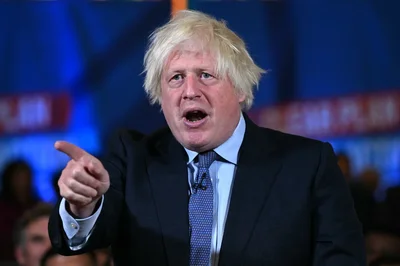
The former Conservative prime minister claimed Miliband’s “failure to stand up to Assad” led “directly” to Putin’s first invasion of Ukraine, and said the Kremlin will be “delighted” with Mr Burnham’s appointment. (AFP/Getty)
Donald Trump’s cabinet reportedly told Mr Burnham they would find it difficult to work with him in any international-facing role. Mr Miliband supports a number of green energy projects that are not favoured by Mr Trump, according to The Telegraph.
He has been reluctant to approve more drilling for more oil and gas in the North Sea, something the president strongly supports.
A government minister was also forced to insist Mr Miliband’s appointment won’t negatively impact Britain’s relationship with the US, despite him having vocally criticised Mr Trump in the past.
Mr Miliband, who will have to work closely with the US administration, previously called the US president a “racist, misogynistic, self-confessed groper”.
Ed Miliband moved to the role of foreign secretary, effectively Britain’s top diplomat on Monday as the new prime minister formed his top team (Reuters)
But asked if this could be an issue in his new role, business secretary Jonathan Reynolds told Sky News: “No, I think as ever that this government will work with allies across the world.
“I know from my experience last time on some of the trade deal negotiations, it can be a robust exchange with our US friends and allies. But they will stand up for what they believe their national interest is, and they will do the same.”
He added: “Well, sometimes I reflect on things that members of the US administration have themselves said about different people in US politics. So they are quite a robust bunch over there in the US and I know they'll have their priorities. We've got ours.
“Can we work together on lots of things in mutual interest in both countries? Absolutely, we can.”