SINGAPORE – The Malay word “dekat” has multiple meanings. In local parlance, it means “at” or “in”, while in Bahasa Indonesia, it is more commonly interpreted as “near”.
It sounds like a simple difference, but it became a point of contention in the high-profile case of former domestic helper Parti Liyani, who was acquitted in 2020 of stealing from her influential employers.
Parti, an Indonesian, had said that she placed some items “dekat” a cardboard box. She meant “near”, but during police interviews, a Malay interpreter understood it to mean “in” the box, said Gusti Seruni, who was then a volunteer interpreter for Parti’s legal team.
Gusti was not present during the police interviews but spoke to Parti multiple times to prepare for the court trial. Resolving such language differences was important to understanding her testimony, she said.
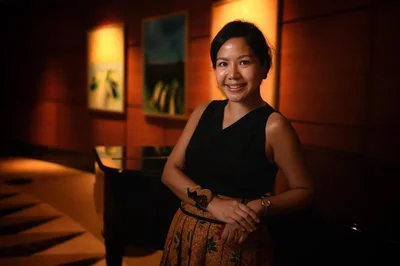
“It was one of the highlights of my life,” said the 42-year-old sole proprietor of a jewellery business, referring to her more than four years of volunteering for the long-drawn legal battle. She spoke to the media at law charity Pro Bono SG’s annual awards ceremony on July 21.
Parti was initially convicted in 2019 of stealing more than $30,000 worth of items from the Liew family and was sentenced to two years and two months in jail. The family’s patriarch, Liew Mun Leong – the former chairman of Changi Airport Group – stepped down after the case broke.
The High Court overturned her conviction on appeal, ruling that the original conviction was unsafe and highlighting issues with the police’s handling of the evidence.
Originally from Indonesia, Gusti came here in 2017 when she married a Singaporean art curator. She first volunteered as a befriender for the Humanitarian Organisation for Migration Economics (HOME), after hearing about its work involving domestic workers.
HOME later supported Parti in her legal case, and Gusti was roped in. Together with the legal team, she spent day and night working on the case, including interviewing Parti and lining up expert witnesses.
She had not registered her jewellery business then and spent most of her time on Parti’s case – a commitment that was almost equivalent to a full-time job, she said.
Despite the challenges of navigating the legal system, she said, “I chose to power through because if it was difficult for me, it must have been way more difficult for (her).”
Gusti was a familiar presence for Parti as she accompanied her throughout the trial (there was a separate court interpreter present). They talked about food and family, “anything that would put her at ease” during breaks.
“(The trial) felt quite intimidating to me, so I can only imagine what it was like for her,” said Gusti.
But Parti kept her spirits up. The domestic helper even whipped up dishes and encouraged them whenever they were anxious, said Gusti.
The acquittal was “well-deserved”, said Gusti, but even after that, she was worried about the other legal processes Parti continued to face. Parti had filed a complaint against two prosecutors conducting her trial, which was later dismissed by a disciplinary tribunal.
Liew Mun Leong’s son, Karl Liew, was called as a prosecution witness during the trial. It later emerged that he had lied to a district judge at the time. He was sentenced to two weeks’ jail in April 2023 after pleading guilty.
After her acquittal, the domestic helper returned home in 2021. The case attracted significant public interest and led to a nine-hour parliamentary debate on the criminal justice system.
Looking back, Gusti said she was grateful that systemic change came about following Parti’s case.
She said: “I believe that Parti, being part of a vulnerable community, deserves the same level of care, commitment and respect from us. Parti herself also deserves equal access to support and justice.”
Gusti receiving a special recognition volunteer award at Pro Bono SG’s annual awards ceremony on July 21.
PHOTO: LIANHE ZAOBAO
Gusti is now a Singapore permanent resident. She is also a regular volunteer with Pro Bono SG, where she helps Indonesian-speaking clients, including those involved in criminal cases.
On July 21, she received a special recognition volunteer award for her role in advancing pro bono work.