KYIV, Ukraine (AP) — One is a tech-savvy drone innovator with no military experience who became Ukraine’s youngest defense minister six months ago and was credited with contributing to successes in defending against Russia’s 4-year-old invasion.
The other is a seasoned, Soviet-trained general more at home with traditional top-down command culture who led Ukraine’s armed forces.
When their personalities and policies clashed, President Volodymyr Zelenskyy decided one of them had to go as part of a wider government reshuffle. He dismissed the popular young upstart, sparking protests across the country.
A look at the contrasting careers of Defense Minister Mykhailo Fedorov and commander of Ukraine’s armed forces, Gen. Oleksandr Syrskyi.
The youthful face of Ukraine’s drone war
The 35-year-old Fedorov was credited with modernizing Ukraine’s drone program and changed military procurement rules in a crackdown on corruption. He argued that the military establishment was resisting changes demanded by the evolving war with Russia.
The former tech entrepreneur drove forward Ukraine’s innovative drone technology that has recently reshaped the battlefield and has earned the interest of other countries, including the United States, as well as those in Europe and the Middle East.
“We transformed Ukraine into a global tech leader and a defense powerhouse,” he said on social media after he lost his job last week in Zelenskyy’s government shake-up.
Fedorov also took credit for restricting Russian military access to Elon Musk’s Starlink satellite internet services.
Before becoming defense minister in January, Fedorov headed Ukraine’s digital transformation policies and introduced successful e-government platforms.
After his dismissal, Fedorov publicly accused Syrskyi of blocking military reforms and insisting on a traditional command culture. That criticism echoed complaints from soldiers and veterans over heavy casualties in costly front-line assaults.
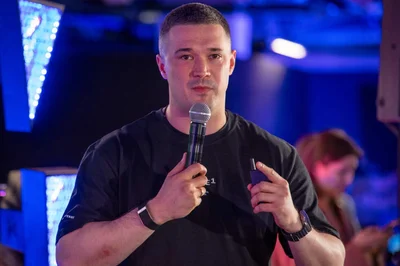
Appearing at a news conference in a dark T-shirt and jeans, Fedorov accused Syrskyi of blocking reforms needed because “the war has changed completely” due to new technology.
The Soviet-trained general dubbed ‘the Butcher’
Protesters framed Fedorov’s removal as an example of Zelenskyy siding in the feud with an entrenched military old guard over a modernizer.
Syrskyi, 60, was born when Ukraine was still part of the USSR. He attended Moscow Higher Military Command School and served in the Soviet Artillery Corps. He has long been associated with a Soviet-style, top-down command culture.
Sign up for Morning Wire:
Our flagship newsletter breaks down the biggest headlines of the day.
He played a key role in some of Ukraine’s biggest victories in its war, overseeing the successful defense of Kyiv in the early days of the invasion in February 2022. Seven months later, Syrskyi was credited with orchestrating the counteroffensive in the Kharkiv region, one of the most significant Ukrainian victories in the war.
“I’m not fighting the (defense) ministry. I’m fighting Russia,” Syrskyi said in a column published Monday in the Ukrainian military outlet Militarnyi that defended his conduct.
“The General Staff has never opposed the ministry — we have cooperated and will keep cooperating with whichever minister the state appoints. Because in the army, you don’t get to choose who you serve with. In the army, you follow orders and do your job,” he said.
Within the military, Syrskyi earned the nickname of “Butcher,” a label that gained wider currency during his command of the ill-fated defense of Bakhmut, one of the war’s longest battles that killed tens of thousands of people.
His reputation took another hit after the Ukrainian outlet Babel published an investigation last month detailing allegations of abuse within the Skelia assault regiment, a unit closely associated with Syrskyi. It reportedly has suffered higher-than-average losses. The investigation documented dozens of deaths among recruits.
The ouster brings protests in Ukraine, glee in Russia
The protests of Fedorov’s ouster and the backlash against Syrskyi reached into the military, with the air force’s deputy commander resigning and warning it would weaken Ukraine’s air defenses. Veterans and soldiers on leave joined the protests. Many demonstrators said they wanted a new generation of generals who would prioritize preserving soldiers’ lives.
The stakes are high for Zelenskyy. The outcry appeared to leave him open to accusations that by ousting Fedorov, he was trying to get rid of a possible political rival. The episode threatened to undermine his authority.
Russian war bloggers responded to Fedorov’s dismissal with glee, noting his role in masterminding long-range drone strikes on oil facilities that have caused a fuel crisis and midrange attacks that disrupted military logistics.
Syrskyi, some noted with grudging respect, has built a string of defenses that have stalled Russian advances.
Many Moscow commentators voiced hope that the controversy would fuel political infighting in Ukraine and weaken its military.
——
Hatton reported from Lisbon, Portugal.
___
Follow the AP’s coverage of the war in Ukraine at https://apnews.com/hub/russia-ukraine