Latin America · Trade
Key Facts
—Brazil rate. A new 50% tariff on Brazilian goods took effect in July 2026, the highest rate facing any Latin American nation.
—Mexico delay. Mexico secured a 90-day postponement on reciprocal levies, keeping most goods at 25% for now.
—USMCA shield. About 89% of Mexican exports that qualify under the USMCA trade pact remain at 0%.
—Metals hit hard. Steel, aluminum, and copper from across Latin America now face a global 50% duty.
—GDP impact. Brazil’s economy could lose 0.5% to 1.0% of GDP, with Mexico facing a 0.2% to 0.4% drag.
Trump tariffs are landing with brutal force on Brazilian exporters while giving Mexican manufacturers a narrow window to adapt, reshaping the trade map for Latin America’s two largest economies.
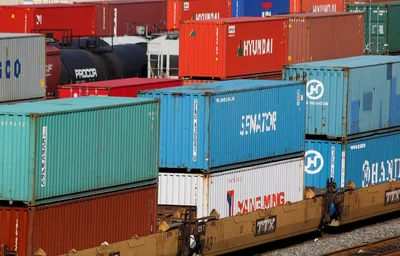
Latin American ports ship commodities and goods to global markets, powering regional trade. (Photo internet reproduction)
One-stop reference
Company Intelligence
Every listed company in Latin America — financials, ownership and structure for 1,450+ companies across 26 exchanges, in one place.
Brazil: The Region’s Hardest Hit
Brazilian exporters now confront a towering 50% duty on shipments to the United States, the highest rate imposed on any Latin American country. The levy combines a 10% baseline, a 40% BRICS alignment penalty, and sector-specific surcharges under Section 301 and Section 232 of U.S. trade law.
The first wave hit on July 22, when a 25% tariff kicked in on furniture, ethanol, machinery, footwear, and sugar. The full 50% rate on steel, aluminum, copper, and automobiles followed on August 7.
The BRICS penalty is a direct political cost for Brazil’s membership in the bloc alongside Russia, India, China, and South Africa. For an economy that sends roughly one-tenth of its exports to the American market, the new math is punishing.
Brazilian officials did secure narrow exemptions for beef and orange juice, sparing two iconic export categories from the heaviest blow. Still, the sheer breadth of the tariffs means factories from São Paulo to Minas Gerais are scrambling to recalculate the cost of doing business with their biggest single-country buyer.
Mexico: A 90-Day Reprieve
Mexican exporters received a partial lifeline. A 90-day delay pushes higher reciprocal levies to roughly November 2026, leaving most goods at a 25% tariff for now.
Crucially, 89% of Mexican trade that qualifies under the USMCA free-trade agreement remains at 0%. The automotive and metals sectors are still exposed, however, with cars facing 25% and steel, aluminum, and copper hit with 50%.
The delay buys time for supply-chain managers in Monterrey and Ciudad Juárez, where factories churn out everything from wiring harnesses to finished vehicles for U.S. consumers. It also gives diplomats a narrow window to negotiate before the higher reciprocal rate locks in.
Mexico’s existing 25% levy on fentanyl-related goods remains in place, a reminder that trade policy and security politics are now tightly intertwined in Washington’s calculations.
Live Market IntelligenceBrazil — Live Market BoardInside: market breadth, the sector heatmap, currencies \& rates, the Latin America scoreboard and the full instrument board.
Rio Times · Live Market Intelligence
Brazil — Live Market Board
B3 · São Paulo
Jul 21, 2026 · 14:35
Ibovespa · benchmark
172,812.43
-0.32%
L 172,219day rangeH 173,720
+28.97% over 12 months
Market breadth · 15 names
60% advancing
9 ▲ advancing6 declining ▼
Currencies, rates \& key inputs
Sector heatmap · average move today
Energy
+1.36%
PETR4, PRIO3
Financials
+0.59%
ITUB4, BBDC4, BBAS3, B3SA3
Mining
+0.34%
VALE3, CSNA3, GGBR4
Consumer Staples
+0.25%
ABEV3
Industrials
-1.64%
WEGE3, RENT3
Consumer Disc.
-1.98%
AZZA3
Latin America scoreboard
IndexLastTodayStrength
IbovespaBrazil
172,812.43
-0.32%
S\&P/BMV IPCMexico
66,125.27
-0.74%
S\&P IPSAChile
10,957.23
+0.55%
S\&P MERVALArgentina
3,281,489
+1.79%
MSCI COLCAPColombia
2,309.56
+0.49%
BVL S\&P PerúPeru
56,620.35
—
Full instrument board
| Instrument | Last | Change | YoY | Prev. | High | Low | Volume |
| --- | --- | --- | --- | --- | --- | --- | --- |
| IBOV | 172,812.43 | -0.32% | +28.97% | 173,371.35 | 173,720 | 172,219 | — |
| USD/BRL | 5.07 | -0.40% | -9.12% | 5.09 | 5.09 | 5.07 | — |
| SELIC | 14.25% | | — | — | — | — | — |
| PETR4 | 41.56 | +1.00% | +33.85% | 41.15 | 41.67 | 41.13 | 17,759,900 |
| VALE3 | 72.35 | +0.58% | +29.03% | 71.93 | 72.97 | 71.57 | 7,411,900 |
| ITUB4 | 42.38 | +0.19% | +23.06% | 42.30 | 42.56 | 42.18 | 5,573,200 |
| BBDC4 | 18.51 | +0.54% | +18.05% | 18.41 | 18.54 | 18.35 | 11,339,300 |
| BBAS3 | 20.67 | +2.48% | +4.08% | 20.17 | 20.69 | 20.08 | 13,232,500 |
| B3SA3 | 15.13 | -0.85% | +15.42% | 15.26 | 15.32 | 14.95 | 18,466,100 |
| ABEV3 | 15.83 | +0.25% | +18.03% | 15.79 | 15.88 | 15.74 | 7,985,300 |
| WEGE3 | 42.68 | -1.04% | +1.62% | 43.13 | 43.34 | 42.50 | 5,043,500 |
| PRIO3 | 58.68 | +1.72% | +37.18% | 57.69 | 58.96 | 58.11 | 2,566,400 |
| SUZB3 | 41.62 | -0.64% | -18.39% | 41.89 | 42.01 | 41.59 | 1,081,600 |
| RENT3 | 36.65 | -2.24% | +2.35% | 37.49 | 37.51 | 36.58 | 3,620,200 |
| AZZA3 | 17.81 | -1.98% | -49.87% | 18.17 | 18.27 | 17.56 | 780,500 |
| CSNA3 | 5.09 | +0.39% | -36.42% | 5.07 | 5.16 | 5.05 | 4,742,500 |
| GGBR4 | 23.63 | +0.04% | +42.24% | 23.62 | 23.77 | 23.42 | 1,798,500 |
| ENEV3 | 25.37 | -1.09% | +84.20% | 25.65 | 25.66 | 25.12 | 1,663,000 |
Largest moves today
BBAS3
20.67
+2.48%
RENT3
36.65
-2.24%
AZZA3
17.81
-1.98%
PRIO3
58.68
+1.72%
ENEV3
25.37
-1.09%
WEGE3
42.68
-1.04%
PETR4
41.56
+1.00%
B3SA3
15.13
-0.85%
The session read
The Ibovespa eased 0.32%, with breadth positive — 9 of 15 names higher. Energy led, while Consumer Disc. lagged.
From The Rio Times
Related coverage · 21 Jul 2026
Brazil’s Embraer KC-390 Could Become a Missile Truck
Read →
How Trump Tariffs Reshape Key Sectors
Steel, aluminum, and copper exports from every Latin American nation now face a global 50% duty under Section 232. For Brazil, a major supplier of iron ore and semi-finished metals, the blow is especially severe.
Automotive supply chains are also in the crosshairs. A 25% tariff on foreign-made cars and auto parts applies broadly, threatening integrated production networks that stretch from Mexico to Brazil and Argentina.
The metals tariff is designed to protect U.S. mills, but it ripples outward instantly. Brazilian slab steel that once flowed to American finishing plants now carries a cost that makes buyers look elsewhere.
For the auto industry, the pain is layered. A Mexican-made SUV could face both the 25% car tariff and, if it contains imported steel, the 50% metals duty, creating a cumulative burden that forces manufacturers to rethink every component source.
Wider Ripple Effects Across the Region
Argentina, Colombia, Peru, Chile, Ecuador, Uruguay, Paraguay, and Bolivia each face a 15% baseline tariff on goods shipped to the U.S. market. Argentine beef, grains, and wine are among the products now carrying the higher duty.
Economists estimate the new tariff wall could shave 0.5% to 1.0% off Brazil’s gross domestic product. The 15% rate applies to roughly 40 countries that run a trade deficit with the United States, a list that sweeps in most of South America.
For smaller economies like Uruguay and Paraguay, even a 15-point jump can erase the thin margins that make their agricultural exports competitive. Mexico’s estimated GDP drag of 0.2% to 0.4% looks modest by comparison, but that figure masks concentrated pain in auto-manufacturing states like Aguascalientes and Puebla.
What It Means for Expats, Investors, and Consumers
For foreign investors with money in Brazilian equities or Mexico’s manufacturing hubs, the tariffs introduce a new layer of uncertainty likely to persist through the 2026 U.S. midterm elections. Currency markets have already begun pricing in weaker export revenues, which can erode returns for dollar-based portfolios.
Expats living in Latin America may feel the pinch through higher local prices if producers divert goods originally meant for export into domestic markets. A glut of steel or ethanol at home can depress local prices in the short term, but the longer-term effect is often reduced investment and slower job growth.
U.S. consumers are not insulated either. Tariffs function as a tax paid by importers, and those costs typically filter down to higher sticker prices on cars, appliances, and construction materials.
The 90-day delay for Mexico offers a brief window for companies to front-load shipments and build inventory ahead of the November deadline. Savvy investors will watch shipping data and corporate earnings calls for signs of how manufacturers are adapting their North American strategies.
What Happens Next
The immediate focus is on the Mexico negotiations, where the 90-day clock is already running. Mexican officials are expected to press for a permanent carve-out on automotive and electronics exports, arguing that integrated supply chains make tariffs self-defeating for American industry.
Brazil has fewer diplomatic levers. Its BRICS membership, which triggered the 40-point penalty, is not something Brasília is likely to abandon, leaving exporters to either absorb the cost, pass it to U.S. buyers, or seek alternative markets in China and the European Union.
Further sectoral tariffs on pharmaceuticals, critical minerals, and aircraft remain under investigation under Section 232, meaning the August measures may not be the last word. Latin American governments are watching those probes nervously, aware that new duties could land with little warning.
For readers tracking the story, the key dates are November 2026, when Mexico’s reciprocal levy delay expires, and the months following, when trade data will reveal whether the tariffs are reshaping export volumes or simply redirecting them through third countries.
Frequently Asked Questions
Which Latin American country faces the highest Trump tariffs?
Brazil faces a 50% tariff, the highest rate in the region. This rate combines a 10% baseline tariff, a 40% penalty tied to Brazil’s membership in the BRICS bloc alongside Russia, India, China, and South Africa, and additional sector-specific surcharges under U.S. trade law.
The full rate took effect on August 7, 2026, though a 25% levy on goods like furniture, ethanol, and sugar began on July 22.
Did Mexico get an exemption from the new tariffs?
Mexico received a 90-day delay on higher reciprocal levies, keeping most goods at a 25% tariff until roughly November 2026. Crucially, about 89% of Mexican exports that qualify under the USMCA free-trade agreement remain at 0%.
However, steel, aluminum, and copper face a 50% duty, and automobiles are subject to a 25% tariff, leaving key industrial sectors exposed.
What Brazilian products are most affected?
Steel, aluminum, copper, ethanol, machinery, footwear, sugar, furniture, and automobiles all face steep new duties. The metals sector is hit with a global 50% tariff under Section 232, while a 25% levy applies to a range of manufactured and agricultural goods.
Beef and orange juice were granted narrow exemptions, sparing two of Brazil’s most recognizable export categories from the highest rates.
Sources \& Further Reading
theguardian.com · ourtake.bakerbotts.com · washingtonpost.com