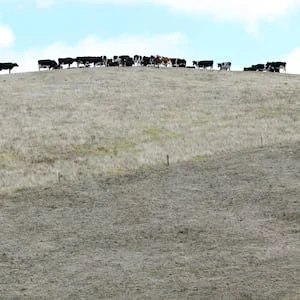
“The discussions are for a strong El Niño, but overall we don’t think it’s going to have massive impact on the amount of livestock you have on the ground,“ Vogel said.
“Usually it’s an issue of finding feed and paying more for feed.”
El Niño hits the hottest and driest parts of the world, such as Southeast Asia.
“We’re basically talking a lot around Malaysia and Indonesia, which are the largest producers of palm oil and with it, the byproduct palm kernel expeller [PKE],” Vogel said.
This region produces and exports about 80% of the world’s supplies of PKE, a supplementary feed that is used extensively in the New Zealand dairy sector when grass is in short supply.
If it gets dry in the palm-oil producing countries, it could take four to six months for farmers to feel the impact of higher PKE prices, Vogel said.
In Australia, growing conditions are favourable in most states, but the onset of dry conditions there could affect grain supply, he said.
Grain prices are already high because of the Ukraine-Russia war.
New Zealand achieved record dairy production in the 2025/26 season and Vogel expected milk volumes to remain strong.
“However, with the drier conditions, the question is do farmers just balance it slightly, because the concern will likely be on the feed cost side in those drier regions,” Vogel said.
Some El Niños have not always had a “massive” impact.
“That’s the thing with El Niño – sometimes the reality is slightly different from what the textbooks tell you, so we keep a close eye on it,” Vogel said.
Prices have remained strong for meat but were a little softer for dairy.
“If we’re unlucky and it is extreme, the impact will be felt quite a bit, but it’s likely to be more of a farm cost issue in our view, rather than a real production change that is felt in terms of supply,” Vogel said.
In Europe, he said the current heatwave was putting upward pressure on animal feed costs, which could affect feed availability.
NZX Dairy’s head of dairy insight Cristina Alvarado said New Zealand has started the new dairy season strongly, with June milk collections up 4.5% year-on-year.
June remains the smallest production month of the season and volumes will increase significantly over the coming months, she said.
“Looking further ahead, forecasts of El Niño conditions developing towards the peak of New Zealand’s production season continue to present uncertainty around milk output later in the year,” she said.
Separately, El Niño is not expected to affect the country’s weather-dependent electricity generation system.
Chantelle Bramley, Transpower’s executive general manager operations, said the grid operator produces a range of security-of-supply modelling, including forecasts produced using data from historical hydro inflow patterns over the last 94 years.
These include all the El Niño events over that time, meaning such an event is inherently considered in its modelling.
“Historically, El Niño conditions in New Zealand typically bring increased rain to the southwest of the South Island, where the bulk of New Zealand’s major hydro catchments are located, and drier conditions to the east,” she said.
Transpower data showed the daily average inflows during El Niño periods are typically above the mean at the start and end of the year.
Bramley said there were some above-average inflows during winter, however there was some variability.
- Stay ahead with the latest market moves, corporate updates, and economic insights by subscribing to our Business newsletter – your essential weekly round-up of all the business news you need.