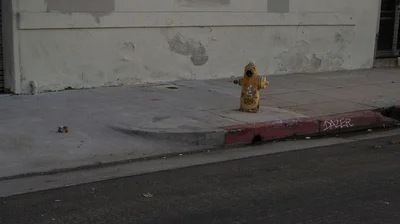
That small ramp where the sidewalk meets the road is called a curb cut. It's everywhere. Chances are, you've used one at some point in your life. Maybe you pushed a stroller from one side of the street to the other. Maybe you crossed on your bike, or rolled a delivery cart to the store. You probably used it without a second thought, and it made your trip a lot simpler.
Did you know the curb cut was originally designed for wheelchair users?
A feature built for people who use wheelchairs made life easier for everyone else too. Imagine pushing a stroller across a street without a curb cut, would be bumpy and hard to lift over the second curb. Imagine hitting a sharp curb on your bike without curb cuts. The curb cut effect is when a design made for people with disabilities ends up helping everyone.
Once you know about the curb cut effect, you’ll start seeing it everywhere. In this article, we'll talk about three more general examples, which are captions, voice typing, and automated doors. In each case, a tool made for people with disabilities became something everyone relies on.
Captions
Captions were originally created for people who are deaf or hard of hearing. Today, captions, in multiple different languages, are an option for most TV shows and movies.
Captions are helpful for people who are deaf and hard of hearing, but they are not the only ones reading along. Captions can also be used by users who are in noisy gyms, where audio would be hard to hear. Opposite of a noisy gym, captions can also be used in quiet offices where users want to be quiet and not disturb others. Many viewers use captions all the time, myself included!
Captions can help you when the environment makes listening hard or when the environment demands quietness. Captions can even help people learn a new language by connecting spoken words to written ones. They can help viewers follow fast dialogue, thick accents, or muddled audio. And for many people with ADHD or other learning and thinking differences, reading along makes it easier to stay focused on what's happening.
A feature made for one group became a tool that millions of people choose to use every day. Another tool that is similar to curb cut effect would be the voice typing feature.
Voice typing
Speech-to-text tools were originally built for people who couldn't use a keyboard. Dictation software gave people with limited mobility a way to write independently, without typing a single key.
Now voice typing is built into almost every device you own. Voice typing is the mic icon on your phone's keyboard when you are texting someone. It's also in Google Docs and Windows. Anyone can use it. You can dictate a text while cooking dinner or even reply to an email on a walk.
Voice typing can also be a powerful tool for people with dyslexia or other learning differences. Speaking a first draft out loud can take the pressure off spelling and handwriting. What started as a tool for people who couldn't type became a faster, easier way for anyone to write.
Automated doors
Automated doors are essential for wheelchair users. A heavy manual door can be a real barrier.
But watch an automated door of any grocery store, and you'll see the curb cut effect in action. Automated doors are great when your arms are full of groceries. They help parents pushing strollers, delivery workers carrying packages, and older adults who find heavy doors hard to manage.
Businesses installed them because they work better for everyone. That's the pattern: what begins as an accessibility feature becomes something we'd all miss if it disappeared.
Conclusion
The curb cut effect challenges a common idea: that accessibility is a special favor for a small group. It's not.
Accessibility is good design. Environments can be enabling or disabling. A staircase disables a wheelchair user. A ramp enables everyone. A dense wall of text shuts out many readers. A clear, well-organized page welcomes them all.
There's a lesson here for anyone who builds things, websites, lessons, workplaces, or products. When you design for people facing the most barriers, you don't just help them. You make the experience better for everyone.
So the next time you roll a suitcase down a curb cut or flip on captions, remember: someone fought for that. Designing for difference isn't a niche concern. It's how we make a world that works for all of us.