Guatemala · Economy
Key Facts
—Q1 2026 Growth Guatemala GDP expanded 4.5% in real terms, up from 3.8% a year earlier.
—Construction Surge The sector grew 7%, the fastest pace among 17 tracked activities.
—Remittance Boost Dollar inflows from abroad rose 11.5%, equivalent to roughly 20% of GDP.
—IMF Outlook The IMF trimmed its full-year forecast to 3.75%, calling Q1 the likely peak.
—Central Bank View Banco de Guatemala maintained its 4.1% growth projection for all of 2026.
Guatemala GDP grew 4.5% in the first quarter of 2026, accelerating from 3.8% in the same period last year, official data showed.
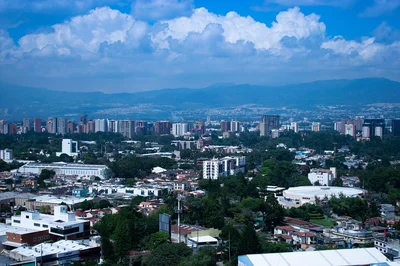
Guatemala City is the capital and largest city, serving as the country's economic and cultural hub.
One-stop reference
Company Intelligence
Every listed company in Latin America — financials, ownership and structure for 1,450+ companies across 26 exchanges, in one place.
RTAsk Rio TimesCost of living, safety, visas across Latin America›
Construction and Remittances Drive Guatemala GDP
The construction sector expanded 7%, the fastest rate among all economic activities. The Escuintla–Puerto Quetzal motorway, a public-private partnership, led the infrastructure push alongside residential projects.
Meanwhile, remittances from abroad surged 11.5% in dollar terms. These money transfers now equal more than 50% of the country’s exports and roughly 20% of total economic output.
Household Spending Gets a Lift
Formal employment rose 4.4%, with more workers contributing to the Guatemalan Social Security Institute (IGSS). Wages grew 4.8%, directly supporting household purchasing power.
Consumer credit also expanded by 5.3%. As a result, final household consumption remained a steady engine for the quarter’s economic activity.
A Broad-Based Expansion Across Sectors
Financial services and insurance grew 6.7%, while accommodation and food services rose 5.4%. Manufacturing, public administration, real estate, commerce, and agriculture all posted gains between 4.3% and 4.5%.
Eight of the 17 tracked activities explained roughly 70% of the variation in quarterly output. Total production reached approximately 164 billion quetzales (US$32.3 billion).
Outlook: A Likely Peak for the Year
The International Monetary Fund (IMF) trimmed its full-year 2026 forecast to 3.75% during a June review. It views the strong first quarter as the likely peak, citing an oil price shock tied to Middle East tensions.
However, Guatemala’s central bank, Banguat, kept its projection at 4.1% in April. The bank will update its outlook in August, weighing resilient consumption against risks of a U.S. economic slowdown.
What This Means for Expats and Investors
For foreign residents and investors, the construction surge signals tangible infrastructure improvements that can ease logistics and daily commutes. The Escuintla–Puerto Quetzal motorway, in particular, connects key commercial zones to a major Pacific port, potentially boosting trade efficiency.
The strong remittance flow also underpins consumer demand, which supports retail, real estate, and service businesses popular with expat entrepreneurs. However, the IMF’s caution about an oil-driven slowdown suggests keeping an eye on inflation and operating costs in the months ahead.
The Bigger Picture: Remittances as an Economic Anchor
Guatemala’s reliance on remittances is both a strength and a vulnerability. These transfers from Guatemalans abroad, mostly in the United States, inject billions of dollars directly into local households, fueling consumption without creating government debt.
Yet this dependence means any U.S. economic downturn or stricter immigration policies could quickly ripple through Guatemala’s economy. For a country where remittances exceed half of all export earnings, diversification remains a long-term challenge that policymakers are only beginning to address.
Understanding Guatemala's Economic Engine
Guatemala has the largest economy in Central America, built on a mix of agriculture, manufacturing, and a growing services sector. Traditional exports like coffee, sugar, and bananas still matter, but textiles, call centers, and tourism now play much bigger roles than they did a generation ago.
The country has long offered political stability and a business-friendly climate compared to some neighbors. This has attracted foreign companies looking for a reliable base to serve North American markets, especially under the CAFTA-DR free trade agreement.
Why Guatemala Appeals to Expats and Investors
A low cost of living and a pleasant climate draw many expats to cities like Antigua and to the shores of Lake Atitlán. For investors, a young and growing workforce keeps labor costs competitive, while the quetzal has historically been less volatile than other emerging-market currencies.
Real estate remains a popular entry point, with demand for both residential and commercial property rising alongside the expanding middle class. The construction boom highlighted in the latest GDP figures is partly a response to this long-term trend, not just a short-term spike.
Risks Worth Watching
Despite the upbeat numbers, Guatemala faces familiar hurdles. Weak tax collection limits public investment in education and health, which can hold back productivity gains over time.
Security concerns and bureaucratic red tape also remain daily realities for businesses. For anyone considering a move or an investment, the key is to balance the country’s clear momentum against these structural challenges.
The current growth story is genuine, but it rests heavily on remittances and construction, two pillars that can wobble if global conditions shift.
Frequently Asked Questions
What drove Guatemala GDP growth in Q1 2026?
A construction boom led by the Escuintla–Puerto Quetzal motorway and an 11.5% jump in remittance inflows were the primary drivers. Formal employment gains and expanded consumer credit also supported household spending.
What is the full-year growth forecast for Guatemala in 2026?
The IMF forecasts 3.75% growth, while Guatemala's central bank maintains a 4.1% projection. Both institutions see the 4.5% first-quarter pace as potentially the year's high point, with external risks like oil prices and a U.S. slowdown weighing on the outlook.
How important are remittances to Guatemala's economy?
Remittances are equivalent to roughly 20% of Guatemala's GDP and exceed 50% of total exports, making them the country's main source of foreign income. They directly fuel household consumption and help stabilize the national currency.