The United States' emergency oil reserve has dropped to its lowest level in more than four decades as Washington continues releasing crude to cushion global energy markets from the fallout of the escalating Iran war.
According to the US Department of Energy, crude oil stocks in the Strategic Petroleum Reserve (SPR) declined by another 5.1 million barrels last week, leaving just 311.4 million barrels in storage -- the lowest level since March 1983.
The latest drawdown comes as part of the US government's plan to release 172 million barrels from the reserve to offset supply disruptions triggered by the conflict in the Middle East. Since the US-Israeli military campaign against Iran began at the end of February, more than 104 million barrels have been withdrawn from the reserve.
WHY IS THE US TAPPING ITS EMERGENCY OIL STOCKPILE?
The Strategic Petroleum Reserve serves as America's emergency energy buffer during major supply shocks, including wars, natural disasters and geopolitical crises.
While commercial oil inventories are owned by private companies and fluctuate with market demand, the SPR is controlled by the federal government and exists solely for extraordinary circumstances.
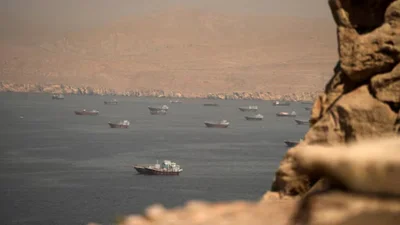
The current release is aimed at easing pressure on global crude supplies after military operations involving the United States, Israel and Iran threatened one of the world's most important oil transit routes.
WHY IRAN MATTERS EVEN THOUGH THE US PRODUCES MOST OF ITS OIL
At first glance, the latest developments may appear surprising.
The US is currently the world's largest oil producer and is also a net exporter of petroleum products. Around 60 per cent of the crude refined in the country comes from domestic production, while much of the remaining imports arrive from neighbouring Canada and Mexico.
Only about 7 per cent of the crude consumed in the US passes through the Strait of Hormuz.
Yet conflict in the Gulf continues to have a direct impact on American fuel prices.
The reason lies in how crude oil is priced.
Oil is traded on global benchmark prices rather than based on where it is produced. When exports through the Strait of Hormuz face disruption, countries that depend heavily on Gulf supplies begin competing for replacement cargoes from producers around the world.
That increased demand pushes benchmark crude prices higher, raising costs for refiners everywhere -- including those in the US.
As a result, American motorists often end up paying more at petrol stations even though relatively little of the country's crude actually passes through the Strait of Hormuz.
IMPACT REACHES FAR BEYOND PETROL PUMPS
Higher crude prices affect much more than drivers filling up their vehicles.
Airlines pay more for jet fuel. Trucking companies face higher diesel costs. Shipping becomes more expensive, increasing the cost of transporting food, consumer goods and industrial products.
Those higher transportation costs eventually make their way into supermarket shelves, airline tickets and everyday household expenses.
The trend has already become visible during the current conflict.
The United States first tapped the SPR shortly after the initial strikes on Iran in early March. Despite the emergency release, fuel prices climbed sharply.
According to the American Automobile Association (AAA), the average price of petrol stood at $2.98 per gallon on February 28 — the day the United States and Israel launched their first strikes on Iran. By mid-May, prices had surged to $4.48 per gallon, highlighting how geopolitical tensions can quickly outweigh emergency government interventions.
WHAT EXACTLY IS THE STRATEGIC PETROLEUM RESERVE?
The Strategic Petroleum Reserve is the world's largest emergency crude oil stockpile.
Created in 1975 following the Arab oil embargo, the reserve was designed to protect the United States from future energy crises after Middle Eastern producers sharply curtailed oil exports, exposing America's vulnerability to foreign supply disruptions.
Today, hundreds of millions of barrels of crude are stored deep underground in massive salt caverns across four sites along the US Gulf Coast.
During emergencies, oil can be rapidly transported through pipelines and barges to nearly half of the country's refineries before entering global markets.
The reserve has previously been used after Hurricane Katrina devastated Gulf Coast oil infrastructure in 2005 and following Russia's invasion of Ukraine in 2022, when fears over disrupted Russian supplies sent Brent crude soaring above $130 per barrel.
Former President Joe Biden authorised the largest release in the reserve's history -- 180 million barrels -- to help stabilise markets as petrol prices climbed above $5 per gallon for the first time.
- Ends
Published By:
Satyam Singh
Published On:
Jul 21, 2026 00:04 IST