Key Facts
- Iron ore proxies softened again with Vale closing at 14.10 $, down -0.63% day-on-day in the latest settled session, signalling a weaker equity read-through for the commodity.
- Brazil’s Vale remains the key global proxy as the world’s second-largest iron ore exporter and Latin America’s flagship name, so its share moves are closely watched as a stand‑in for the physical price.
- CSN Mineracao bucked Vale’s move ending the session at 1.01 $, up +2.02% day-on-day, a small-cap bounce that contrasts with the softer tone in the majors.
- Rio Tinto tracked the global tone lower closing at 89.07 $, down -1.20% day-on-day, underlining that iron ore weakness is not Brazil-specific.
- Spot iron ore is still trading just under 100 $/t with recent closes around 98.88 USD per metric tonne for 62% Fe delivered into China, keeping the market in its familiar 90-110 $/t range for 2026.
- China’s steel demand signals remain mixed with weak or sideways steel prices, high inventories and only modest World Steel Association growth projections, leaving iron ore in a supply-heavy but price-supported stalemate.
Today’s Focus
Iron ore itself is holding near the 100 $/t mark, but the shares that foreign investors use as a shortcut for the market — Vale in Brazil and Rio Tinto in Australia and London — eased again in the latest settled session. Vale slipped to 14.10 $ while Rio Tinto fell to 89.07 $, even as CSN Mineracao edged higher, leaving the overall equity signal mildly negative rather than panicked.
Behind the price, the story has not changed much for Latin American readers: China still buys roughly three-quarters of seaborne iron ore, yet its steel demand is soft and patchy, with construction weak and manufacturing only partly offsetting the drag. That creates a curious mix of high Chinese imports and weak steel pricing, so ore keeps drifting within a 90-110 $/t band while the miners’ margins stay healthy.
For Brazil, this matters because Vale is both a national champion and a bellwether for external accounts, tax receipts and local equity sentiment, particularly when other commodities are also moving. Internationally, Rio Tinto’s parallel decline confirms that this is a broader iron ore mood swing, not a Brazil-only scare.
The key tension is between comfortable supply — anchored by the big exporters and future projects like Guinea’s Simandou — and the possibility that Beijing leans again on steel‑intensive stimulus, which could squeeze prices higher. Until that breaks one way or the other, investors are likely to treat every dip in iron ore equities as a trading range rather than the start of a new trend, with Chinese steel demand the variable to watch.
What matters today. What matters now is whether China’s steel demand and policy stimulus are strong enough to absorb a slightly oversupplied seaborne ore market without forcing prices to break out of the 90-110 $/t range that has framed 2026 so far.
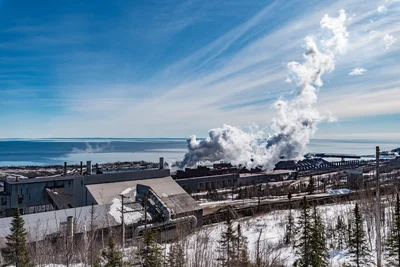
Iron Ore — the daily wrap. (Photo internet reproduction)
One-stop reference
Company Intelligence
Every listed company in Latin America — financials, ownership and structure for 1,450+ companies across 26 exchanges, in one place.
RTAsk Rio TimesMarkets, currencies and the economy›
RT
Ask Rio Times
Latin American markets, currencies and companies.
×
Markets todayThe currencyRates \& inflationEconomy outlook
01 The session in one read
Iron ore’s latest settled session left the underlying commodity broadly steady around the 100 $/t mark, but the equity proxies that most foreign investors trade nudged lower. Vale closed at 14.10 $, down -0.63% on the day, while Rio Tinto slipped to 89.07 $, down -1.20%, signalling softer sentiment even though the physical market did not crack.
This was not a one‑off Brazilian wobble: Rio’s decline shows the cautious tone is global, while smaller Brazilian player CSN Mineracao actually moved against the grain, finishing at 1.01 $, up +2.02%. Overall, the picture is of a market marking time inside a well‑known price range as traders wait for clearer cues from China’s steel sector.
Assessment — Range-bound with a downside tilt MEDIUM
The balance of evidence still points to a range‑bound iron ore market with a mild downside bias rather than a fresh bull or bear phase. Spot prices near 98-100 $/t are high enough that the big miners, including Vale and Rio Tinto, continue to earn attractive margins, but not so high that marginal producers are rushing in new supply. At the same time, demand from China, which takes about 75% of seaborne imports, is constrained by weak construction and cautious manufacturing, even though customs data show higher import volumes and inventories building in ports. Forecasts from groups such as BMI and Moody’s cluster around mid‑90 $/t averages for 2026 and slightly lower levels over the next few years, reflecting expectations of structural oversupply as Simandou and other projects ramp up and Chinese steel demand stagnates. For Latin American investors, that implies iron ore names remain cyclical but not broken, with earnings and dividends still tied to the China cycle but within a gradually easing price corridor, and Chinese steel demand is the variable to watch.
02 The board
The live board now shows Vale at 14.10 $, CSN Mineracao at 1.01 $ and Rio Tinto at 89.07 $, and these three names together offer a practical read-through on iron ore for anyone without a direct spot feed. Given that iron ore itself is still trading just under 100 $/t, the fact that the two giants eased while the smaller Brazilian name bounced suggests investors are trimming risk in the global majors rather than fleeing the whole sector.
For an outsider, it helps to see these share prices as a leveraged mirror of the ore price: when iron ore drifts a fraction, the equities often move more because they fold in expectations about future prices, costs and dividends. That is why a seemingly modest daily slip like -0.63% for Vale or -1.20% for Rio Tinto can still matter for portfolio marks, even when the underlying ore price barely budges.
| Asset | Level | Change |
| --- | --- | --- |
| Iron ore (Vale) | 14.10 $ | -0.63% |
| CSN Mineracao | 1.01 $ | +2.02% |
| Rio Tinto | 89.07 $ | -1.20% |
Source: EODHD close, 2026-07-20. Where a commodity has no spot feed, an exchange-traded tracker or leading producer is shown as a labelled proxy.
03 What moved it
Under the surface, the main driver remains China’s steel demand, which sets the tone for the 62% Fe benchmark price delivered to Chinese ports. Customs data show China imported 210.02 million tonnes of iron ore in the first two months of 2026, up 10% year-on-year, yet much of that material is going into storage rather than into steel, reflecting weak demand on the ground.
Analysts describe a seaborne market that is modestly oversupplied, with the big three exporters — including Vale — shipping roughly 970 million tonnes a year between them and total seaborne demand at about 1.5-1.55 billion tonnes, leaving a surplus of around 30-75 million tonnes in 2026. That surplus, together with soft steel prices and seasonally weaker Chinese construction activity, explains why iron ore has spent most of 2026 moving in a 90-110 $/t band and why equity investors reacted cautiously even to small daily moves in the spot price.
04 The Latin American read
For Latin America, Brazil’s Vale is the reference name because it dominates regional iron ore exports and plugs straight into the Chinese steel cycle. When Vale slips to 14.10 $ even with spot prices still near 100 $/t, it tells foreign investors that the market is starting to price in either softer ore prices ahead, higher costs, or both.
CSN Mineracao’s 2.02% daily gain is a reminder that smaller, more domestically focused miners can trade on their own stories — balance sheet repair, specific mine news or local demand — but they do not override the broader signal from Vale. For Latin American portfolios and currencies, the key is that iron ore remains profitable but less exuberant, which tempers export windfalls while keeping Brazil’s terms of trade far from crisis territory.
05 The names to watch
Vale is still first on any watch list because of its scale, dividend potential and the way global funds use it as shorthand for Brazilian and iron ore exposure. Analysts’ 12‑month price targets around the mid‑teens to high‑teens per share assume iron ore averages close to consensus forecasts in the mid‑90 $/t area, so any sharp break below that range would hit the stock’s valuation hard.
Rio Tinto offers a cleaner global comparison because it combines Australian and international production, while its earnings mix is more diversified across iron ore and other commodities. When both Vale and Rio Tinto move down together, as they did in the latest session, it usually reflects a view on the ore price and Chinese demand rather than Brazil-specific politics. CSN Mineracao, by contrast, serves as a high‑beta local play whose 2.02% rise today should be read as noise rather than a new trend.
06 The outlook
Looking ahead, most institutional forecasts still cluster around average iron ore prices of roughly 94-96 $/t for 2026, slipping further into the high‑80s by 2027 as new low‑cost supply from Guinea’s Simandou and elsewhere adds to an already comfortable market. That suggests more of the same for now: a range‑bound market where dips toward 90 $/t could attract buying from mills and traders, but where persistent Chinese construction weakness limits any sustained move above 110 $/t, leaving Latin American iron ore equities dependent on cost discipline, capital returns and, above all, Chinese steel demand.
07 What to watch
- China construction and property: Because residential and infrastructure building still drive a large share of China’s steel use, any stabilisation or renewed downturn in property sales and new starts will quickly feed through to iron ore demand and prices.
- Chinese steel prices and margins: Steel prices for rebar and hot-rolled coil, and whether mills are profitable, determine their appetite for iron ore and their willingness to restock, which in turn can push the ore market out of its current range.
- Seaborne supply growth and Simandou: The ramp-up of Guinea’s Simandou project and incremental output from major miners will decide how large the supply surplus becomes, affecting how quickly prices drift from the current high‑90s towards the mid‑90 $/t consensus.
- Policy stimulus and environmental curbs in China: Fiscal stimulus for infrastructure and any new rounds of winter steel production cuts can both shift ore demand sharply, either absorbing surplus tonnes or leaving more cargoes hunting for buyers at lower prices.
Frequently Asked Questions
How did Vale trade in the latest settled session?
Vale closed at 14.10 $, down -0.63% day-on-day, reflecting a slightly weaker view on iron ore and Brazil’s mining sector even though spot ore prices remain near 100 $/t.
Is iron ore still profitable for the big miners?
Yes; with spot prices around 98-100 $/t and estimated cash costs for the majors far lower, large exporters like Vale and Rio Tinto still enjoy healthy margins despite the market’s modest oversupply.
Why is China importing more ore if its steel demand is weak?
China’s customs data show higher iron ore imports, but analysts note that much of this is going into port inventories rather than steel production, reflecting opportunistic buying at lower prices and cautious expectations about future demand.
What are analysts expecting for iron ore prices in 2026?
Consensus forecasts from institutions such as BMI, Moody’s and aggregated bank surveys point to average prices around 94-96 $/t in 2026, easing towards the high‑80s or low‑90s by 2027 as supply grows and Chinese steel demand stagnates.
LatAm Markets: Live Signals → — real-time movers, turnover leaders and FX across Latin America.
Read More from The Rio Times