-
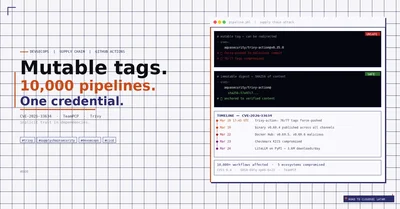
CI/CD Pipeline Supply Chain Attacks In March 2026, a series of sophisticated supply chain attacks targeted CI/CD pipelines and open-source software ecosystems, with the threat actor TeamPCP orchestrating compromises of widely used tools and packages such as Trivy, LiteLLM, and the Telnyx Python SDK. These attacks involved injecting malicious code into trusted software components, including container images and Python packages, to steal credentials and exfiltrate sensitive data using novel techniques like WAV audio steganography. The campaign demonstrated the high-risk nature of CI/CD pipelines, which hold privileged access to source code, cloud credentials, and deployment processes, making them prime targets for attackers aiming to maximize impact. The attacks have prompted a critical reassessment of supply chain security practices, emphasizing the need for rigorous verification, dependency pinning, and continuous vulnerability scanning within DevOps workflows. The ongoing threat and recent pause in new compromises suggest TeamPCP is currently monetizing stolen credentials but remains a persistent danger to software supply chains worldwide. research →

-
Mac Apps for Developers in 2026 In 2026, Mac developers are increasingly relying on a curated set of applications to enhance productivity, streamline workflows, and improve security. Key apps like Warp, a modern terminal with AI-powered features, and Raycast, a powerful launcher and productivity tool, consistently appear across various developer needs—from AI agent development and interview preparation to privacy protection and language-specific workflows. These apps leverage native Apple Silicon support and integrate deeply with developer tools, making them essential for efficient coding, debugging, and project management. The widespread adoption of these tools highlights a shift towards more integrated, keyboard-driven, and privacy-conscious development environments on Mac. This trend matters as it reflects how software ecosystems evolve to meet the growing complexity and demands of modern software development. research →

-
API-first Economy Evolution The API-first economy, which began around 2011 with companies like Heroku, Facebook, Twitter, and GitHub pioneering powerful and open APIs, is now entering its second wave. Initially driven by optimism for openness and interconnectivity, early API designs enabled full platform control and third-party innovation without private endpoints. Today, this approach has matured into a foundational strategy for software and infrastructure development, with numerous free and open APIs from projects like Grafana Loki, Scalar, ArgoCD, Dokku, Crossplane, Vercel, and Prometheus supporting scalable, cost-effective, and automated workflows. The evolution highlights the importance of APIs as invisible infrastructure that enables seamless integration, automation, and extensibility across cloud, DevOps, and application ecosystems. This ongoing transformation underscores APIs' critical role in driving digital innovation, developer productivity, and enterprise agility in the modern software landscape. research →

-
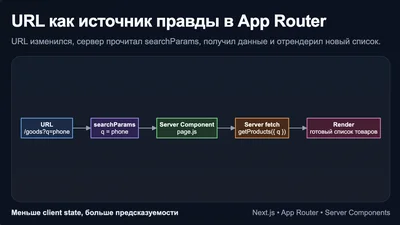
React and Next.js Advances Recent developments in React and Next.js are significantly improving web application performance and developer experience. React Server Components (RSCs) eliminate the traditional client-side data fetching waterfall by running components exclusively on the server, allowing direct database access and delivering fully rendered HTML to clients without loading spinners. Meanwhile, Next.js introduces a sophisticated server-side caching mechanism that caches both raw data and rendered pages, reducing database load and speeding up response times for multiple users. These innovations simplify state management, improve UI responsiveness, and provide clearer architectural patterns, marking a major shift in modern web development. Understanding these changes is crucial for developers aiming to build scalable, high-performance React applications. research →
-
Kubernetes Cloud Infrastructure Advances Recent developments in Kubernetes and related cloud infrastructure tools highlight significant advancements in managing and securing cloud-native environments. Kubernetes 1.33 Octarine introduces dynamic in-place pod resizing and enhanced security through user namespaces, improving resource management and multi-tenant isolation. Crossplane extends Kubernetes into a universal control plane for cloud infrastructure, enabling native management of AWS, GCP, and Azure resources with GitOps integration, eliminating the need for separate state files. Additionally, practical implementations such as multi-node homelabs demonstrate Kubernetes' flexibility beyond traditional cloud providers, while new workflow engines and AI agent orchestrators leverage Kubernetes-native architectures for automation and developer productivity. These innovations collectively underscore Kubernetes' growing role as a foundational platform for scalable, secure, and automated cloud infrastructure. research →
-
Cursor Code Editor Growth Cursor, a code editor developed by a startup with fewer than 100 employees, has rapidly grown to 1 million daily active users within two years. Unlike other AI coding tools that function as extensions within existing editors like VS Code, Cursor forked and modified the entire VS Code editor at the source level, allowing deep integration of AI features into every aspect of the editing experience. This approach enables advanced functionalities such as multi-file inline diffs, file tree modifications, and terminal command executions, which have attracted over 50,000 businesses including major companies like Stripe and Figma. Cursor's success highlights a significant shift in the code editor market, challenging long-standing leaders by innovating on core editor architecture rather than layering AI on top. This growth underscores the increasing demand for AI-powered development environments that offer seamless and powerful coding assistance. research →

-
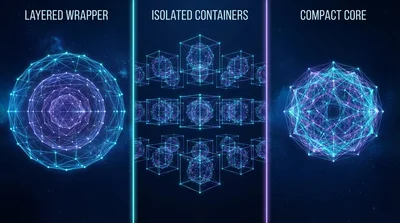
Rust-based Operating Systems In 2026, the Rust programming language is increasingly shaping the development of modern operating systems and system components. Projects like MicronOS are building fully modular, memory-safe OS kernels from scratch in Rust, emphasizing security and POSIX compatibility. Canonical announced plans to integrate Rust-based components such as ntpd-rs for time synchronization into Ubuntu 26.10 and 27.04, aiming to replace legacy C-based tools with safer Rust alternatives. Additionally, initiatives like OptimaOS explore unified kernels to serve diverse hardware platforms, addressing fragmentation and legacy technical debt in existing OS ecosystems. These developments highlight Rust's growing role in creating reliable, secure, and maintainable system software, which could significantly impact the future of OS design and deployment. research →
-
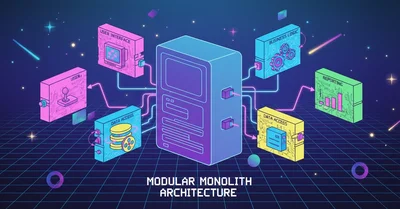
Microservices Challenges in Startups Many startups adopting microservices face significant operational and cognitive burdens that hinder feature development and product velocity. While microservices promise benefits like independent deployments and scalability, smaller teams often spend disproportionate time on infrastructure management rather than shipping features. Experts suggest alternatives such as modular monolith architectures that provide clear internal boundaries without the complexity of distributed systems. Real-world incidents highlight lifecycle management and graceful shutdown challenges in microservices, underscoring the need for pragmatic architectural choices tailored to team size and product maturity. This conversation is critical as startups must balance innovation speed with manageable technical complexity to survive and grow. research →
-
GitHub Contribution Graph Manipulation A controversial web tool has emerged that manipulates GitHub contribution graphs by automating backdated commits to create pixel art on user profiles. This tool exploits GitHub's REST API to generate commits across multiple repositories, effectively painting custom designs on the contribution graph, which visually aggregates commit activity without verifying contextual metadata. While visually creative, this practice misleads viewers about actual developer activity and violates GitHub's terms of service. Additionally, the tool stresses GitHub's API rate limits, causing temporary outages when quotas are exceeded. The controversy highlights broader concerns about authenticity and integrity in developer profiles and platform usage policies. research →